
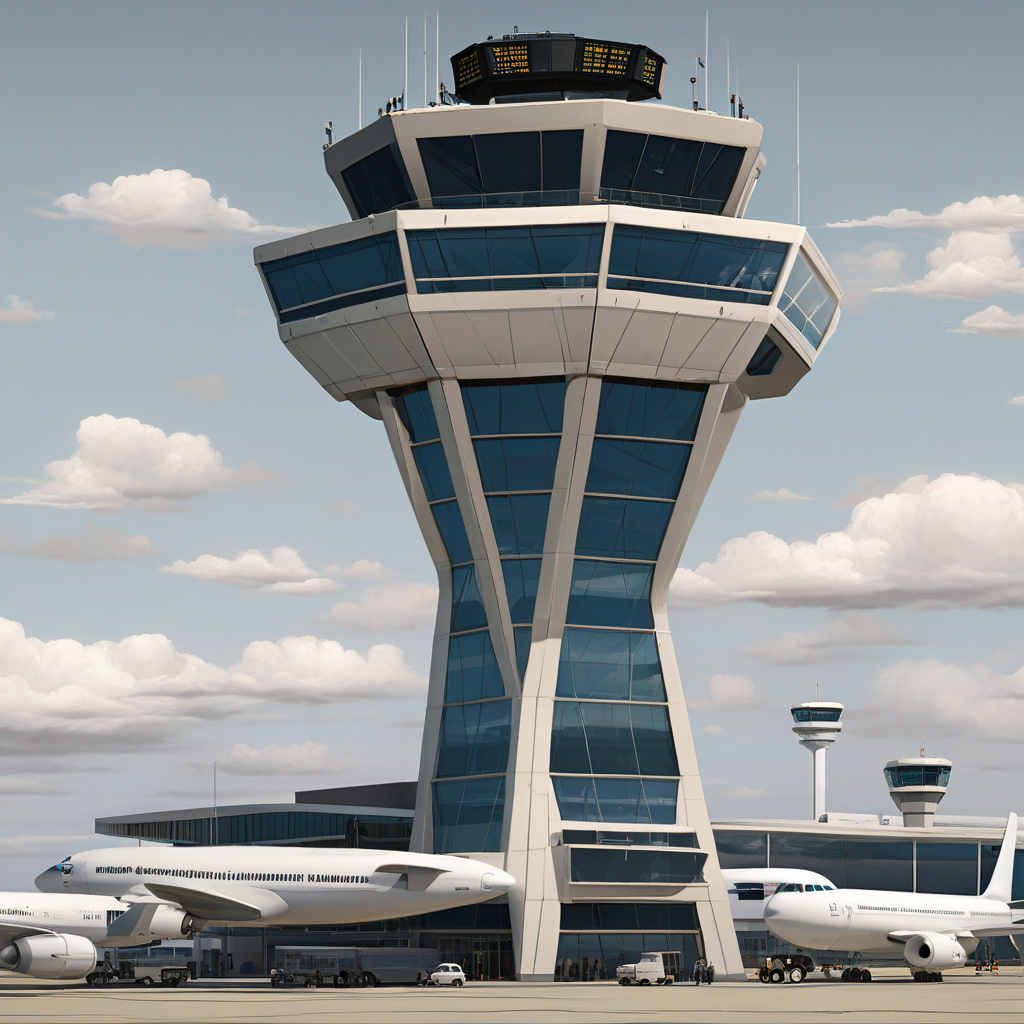
Decoding the Skies: A Closer Look at Air Traffic Control Technology
If you’ve ever gazed up at a busy sky full of airplanes and marveled at the orchestrated dance they perform, you might have pondered how it all comes together seamlessly. The answer lies in the intricate web of technology that underpins air traffic control systems worldwide.
At its core, air traffic control technology functions as the nerve center of the aviation industry, ensuring the safety and efficiency of air travel. By leveraging a combination of radar, satellite communications, automation, and human expertise, these systems manage the flow of aircraft in the skies with remarkable precision.
Radar and Surveillance Systems
One of the fundamental components of air traffic control technology is radar. Radar systems use radio waves to detect the position, speed, and altitude of aircraft in real-time. This information is then relayed to air traffic controllers, allowing them to monitor and manage the movement of planes within their designated airspace.
In recent years, traditional radar systems have been complemented by advanced surveillance technologies such as Automatic Dependent Surveillance-Broadcast (ADS-B). ADS-B enables aircraft to broadcast their precise GPS-based position and other relevant data to ground stations and other aircraft, enhancing situational awareness and safety.
Communication and Navigation
Effective communication lies at the heart of air traffic control operations. Controllers use a combination of radio communication, data links, and voice over IP (VoIP) systems to relay instructions to pilots, provide updates on weather conditions, and coordinate take-offs and landings.
Navigation aids such as Instrument Landing Systems (ILS) and Global Positioning System (GPS) play a crucial role in guiding aircraft during approach and landing. These systems provide pilots with accurate positioning information, helping them navigate safely, especially in adverse weather conditions or low visibility.
Automation and Decision Support Tools
As air traffic volumes continue to rise, automation has become increasingly essential in managing complex airspace efficiently. Automated systems help optimize routes, predict potential conflicts, and assist controllers in making informed decisions quickly.
Decision support tools, powered by sophisticated algorithms and machine learning, analyze vast amounts of data to identify potential bottlenecks, optimize traffic flows, and enhance overall airspace capacity. These tools enable controllers to proactively manage traffic and respond to changing conditions effectively.
Collaborative Decision Making
In the modern era of air traffic control, collaboration is key. Collaborative decision-making platforms bring together airlines, airports, air traffic control authorities, and other stakeholders to exchange information, coordinate schedules, and streamline operations for mutual benefit.
By sharing real-time data on flight plans, weather patterns, and airspace constraints, stakeholders can collectively optimize routes, reduce delays, and enhance safety. This collaborative approach fosters a more efficient and harmonized air traffic management system, benefiting both operators and passengers.
Looking Ahead: The Future of Air Traffic Control Technology
As technology continues to evolve at a rapid pace, the future of air traffic control holds exciting possibilities. Innovations such as artificial intelligence, unmanned aircraft systems (UAS), and dynamic airspace management are poised to revolutionize how we navigate the skies.
By harnessing the power of data analytics, machine learning, and digital connectivity, air traffic control systems will become even more agile, adaptive, and resilient. These advancements promise to enhance safety, optimize efficiency, and accommodate the growing demands of air travel in the 21st century.
In conclusion, air traffic control technology is a sophisticated blend of innovation, collaboration, and precision engineering. By seamlessly integrating radar, communication systems, automation, and decision support tools, these technologies ensure that the skies remain safe and accessible for all. As we look to the future, the evolution of air traffic control promises to shape a more connected, efficient, and sustainable aviation ecosystem for generations to come.