
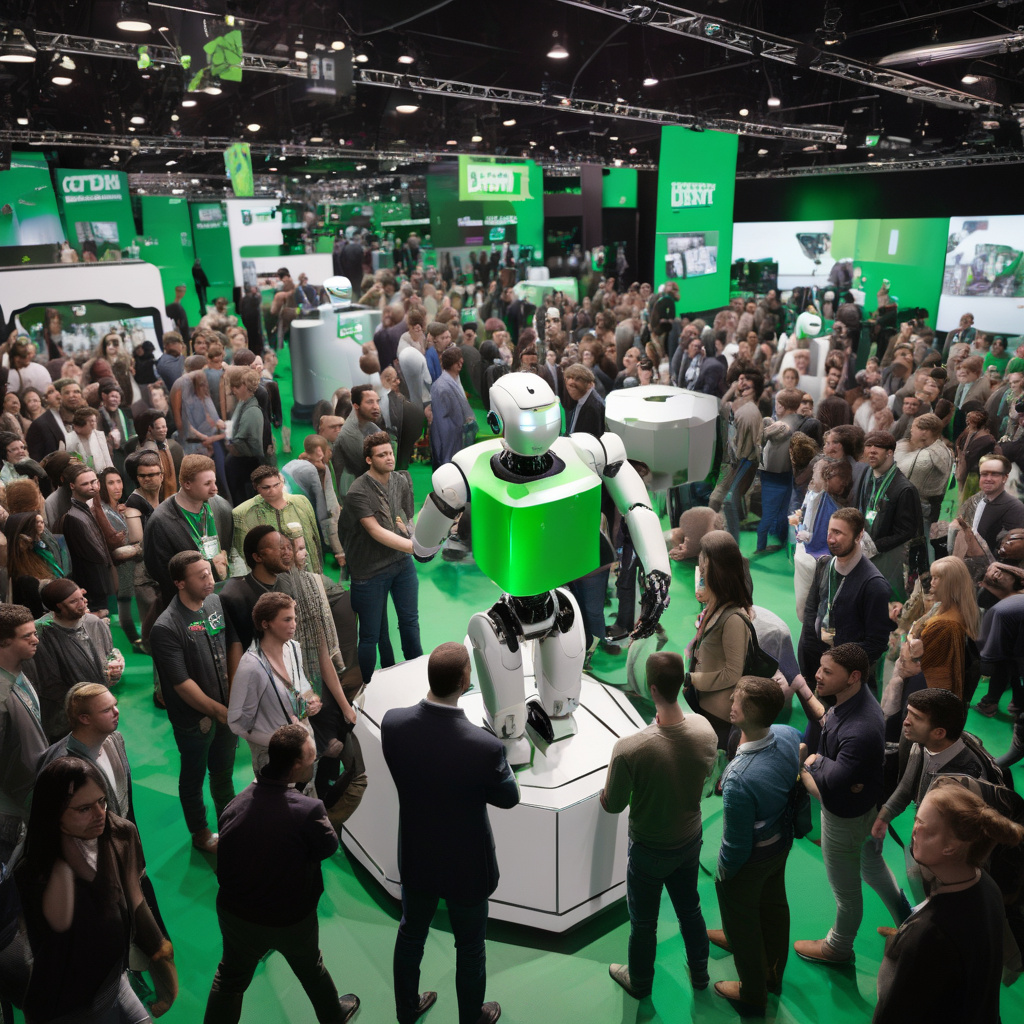
The year is 2025, and TechCrunch Disrupt has once again taken the tech world by storm. This time, the spotlight is on the future of AI hardware, exploring the fascinating intersection of humanoids, autonomous vehicles (AVs), and the next frontier in artificial intelligence. As 10,000+ startup and venture capital leaders gather at Moscone West in San Francisco from October 27 to 29, the anticipation is palpable for the groundbreaking ideas and conversations that will shape the tech landscape for years to come.
One of the most eagerly awaited sessions at the event is set to unfold on the AI Stages, delving deep into the trajectory of AI hardware. The convergence of humanoids and AVs with cutting-edge AI technologies promises a glimpse into a future where machines not only think but also interact with the world in increasingly human-like ways.
Imagine a world where humanoids seamlessly navigate our cities, assisting us in our daily tasks with unprecedented efficiency. Picture AVs that not only drive autonomously but also communicate intelligently with their surroundings, ensuring safer and more streamlined transportation systems. This is the future that AI hardware is hurtling towards, with implications that extend far beyond mere convenience.
At the core of this evolution lies the relentless push for more powerful and efficient hardware. From advanced processors capable of lightning-fast computations to sophisticated sensors that enable machines to perceive and understand their environment, the demands on AI hardware are ever-increasing. This means that the next generation of AI devices will need to be not only smarter but also more energy-efficient and agile than ever before.
To achieve this ambitious goal, innovators are exploring a myriad of cutting-edge technologies. Neuromorphic computing, inspired by the human brain’s neural architecture, promises to revolutionize AI by mimicking the brain’s parallel processing capabilities. Quantum computing, with its potential for exponential speedups, holds the key to solving complex problems that are currently beyond the reach of classical computers.
Moreover, advancements in materials science are paving the way for the development of novel hardware components that are not only faster but also more durable and scalable. From graphene-based transistors to nanoscale sensors, these breakthroughs are driving the next wave of AI innovation, setting the stage for a future where AI hardware is as versatile and adaptive as the human mind itself.
As we look ahead to the exciting possibilities that await us at TechCrunch Disrupt 2025, it becomes clear that the future of AI hardware is not just about creating smarter machines—it’s about reimagining the very fabric of our interactions with technology. By embracing the convergence of humanoids, AVs, and cutting-edge AI technologies, we are not only shaping the future but also redefining what it means to be truly human in an increasingly digital world.
In conclusion, the journey towards the next frontier in AI hardware is a thrilling one, filled with endless possibilities and transformative potential. As we gather at TechCrunch Disrupt 2025 to explore the intersections of humanoids, AVs, and AI, we are not just witnessing the evolution of technology—we are actively shaping it. So, let’s buckle up and get ready for a future where the lines between man and machine blur, and the possibilities are limited only by our imagination.