
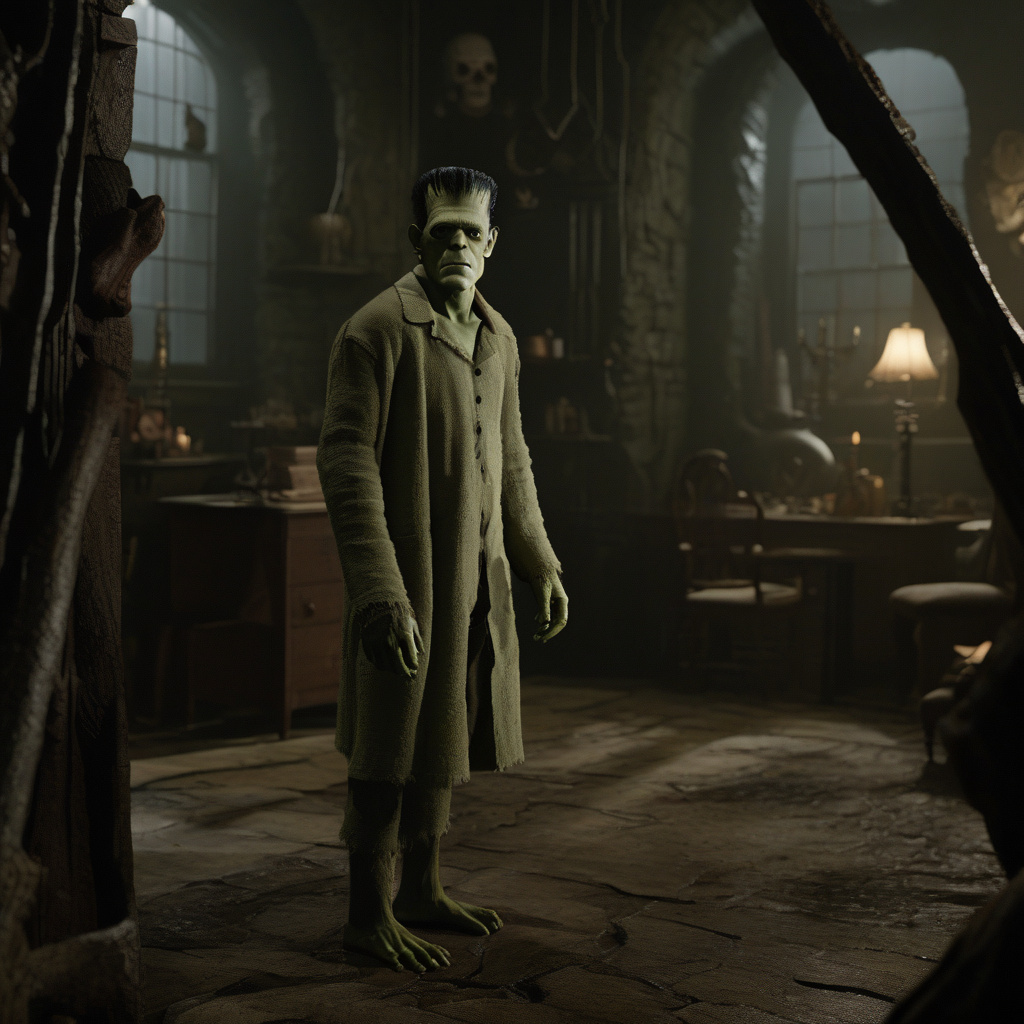
Netflix’s Frankenstein Continues 2025’s Horror Trend of Sympathetic Monsters
When Mary Shelley penned “Frankenstein” in 1818, little did she know that two centuries later, audiences would still be captivated by her creation. Netflix, in collaboration with Guillermo del Toro, has brought a fresh adaptation of the classic tale to screens, showcasing a trend where monsters are portrayed as complex beings with human emotions rather than mere frightful figures.
In this latest iteration, Jacob Elordi’s portrayal of Frankenstein’s Creature and Oscar Isaac’s Victor sheds light on the emotional depth behind the monster’s actions, mirroring a shift in the horror genre towards multifaceted characters. This evolution is evident in various contemporary works, from the zombies in “28 Years Later” to the vampires in “Sinners,” all reimagined with layers of complexity and empathy.
The question arises: why are we increasingly empathizing with the monsters we once feared? The answer lies in the nuanced storytelling that delves beyond surface-level scares to explore the emotional and psychological aspects of these creatures.
In del Toro’s adaptation, Frankenstein’s Creature is depicted not as a monstrous being but as a figure marked by vulnerability and trauma. The scars and patches on his body narrate a tale of survival, fostering a sense of empathy rather than dread. His journey from a child-like state to self-awareness underlines the notion that monsters are shaped by their experiences and surroundings.
The portrayal of the Creature as an innocent and dependent entity contrasts sharply with Victor’s neglectful and dismissive behavior, painting him as the true antagonist. Through this lens, the Creature emerges as the protagonist, evoking sympathy and challenging traditional perceptions of good and evil.
Similarly, in “Sinners,” the character of Remmick the vampire embodies a complexity that blurs the lines between hero and villain. His backstory of colonization and oppression adds layers to his actions, showcasing a character driven by internal struggles and desires for connection despite his morally ambiguous choices.
In “28 Years Later,” even the Infected, typically portrayed as mindless monsters, reveal moments of vulnerability and humanity, highlighting that fear and violence can coexist with fragility and empathy. These nuanced portrayals redefine modern horror, emphasizing that true terror stems not from the monsters themselves but from the societal forces that shape them.
As we navigate this era of horror storytelling, where monsters are no longer one-dimensional entities but reflections of our own humanity, the true horror lies in the world that molds these creatures. Netflix’s “Frankenstein” and its counterparts pave the way for a new era of horror, one where empathy and understanding reign supreme, challenging viewers to confront the complexities of good, evil, and everything in between.