
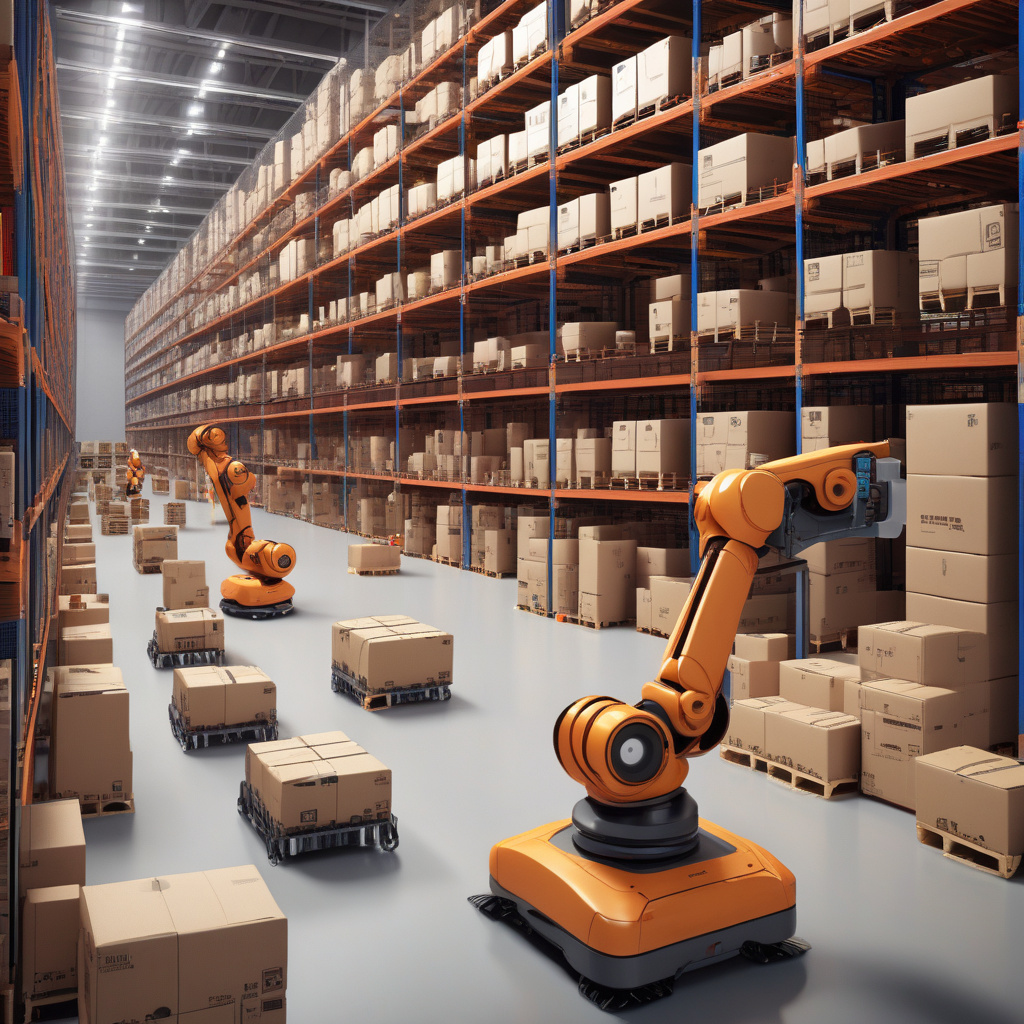
In the ever-evolving landscape of logistics, automation has become a game-changer, improving efficiency and streamlining operations. Warp, a key player in the industry, is now taking automation to the next level by introducing robots to its network of warehouses. While long-haul trucking and short-range delivery may not be easily automated yet, Warp is focusing on transforming the internal workflows of its warehouses.
By embracing robotics within its warehouse operations, Warp is poised to revolutionize the way goods are stored, picked, and packed. These robots can navigate through the warehouse floor, swiftly moving items from one location to another, significantly reducing the time and effort required for manual labor. This shift towards automation not only enhances productivity but also minimizes the risk of errors, ensuring greater accuracy in order fulfillment.
One of the key advantages of incorporating robots in warehouse processes is the ability to handle repetitive tasks with precision and consistency. Unlike human workers who may experience fatigue or distractions, robots can work tirelessly around the clock, maintaining a high level of performance throughout. This continuous operation leads to faster processing times, enabling Warp to meet customer demands more efficiently.
Moreover, the introduction of robots in warehouse automation allows for better utilization of space. By optimizing storage configurations and maximizing vertical storage capacity, warehouses can accommodate a larger inventory within the same footprint. This increased storage efficiency translates to cost savings for Warp, as it can store more goods without the need for expanding physical infrastructure.
Additionally, automation in warehouses enhances safety measures by reducing the presence of humans in potentially hazardous environments. Robots can handle heavy loads and navigate through confined spaces with ease, minimizing the risk of accidents or injuries. This prioritization of safety not only protects workers but also contributes to a more secure and controlled warehouse environment.
Furthermore, the data-driven nature of robotic automation provides valuable insights for optimizing warehouse operations. By collecting and analyzing data on inventory movement, order processing times, and resource allocation, Warp can identify areas for improvement and implement strategic changes to enhance overall efficiency. This data-driven approach empowers the company to make informed decisions that drive operational excellence.
While the integration of robots in warehouse automation represents a significant technological advancement, it is essential to recognize that human workers remain an integral part of the process. Collaborative robots, or cobots, work alongside human employees, leveraging their strengths in tasks that require flexibility, problem-solving, and decision-making. This human-robot collaboration creates a synergistic work environment where each contributes their unique capabilities to achieve optimal results.
In conclusion, Warp’s initiative to introduce robots to automate its network of warehouses marks a pivotal moment in the logistics industry. By focusing on transforming internal workflows and leveraging the power of automation, Warp is poised to enhance operational efficiency, improve accuracy, and drive innovation in warehouse management. As automation continues to evolve, the seamless integration of robots into warehouse operations paves the way for a more agile, adaptive, and productive logistics ecosystem.