
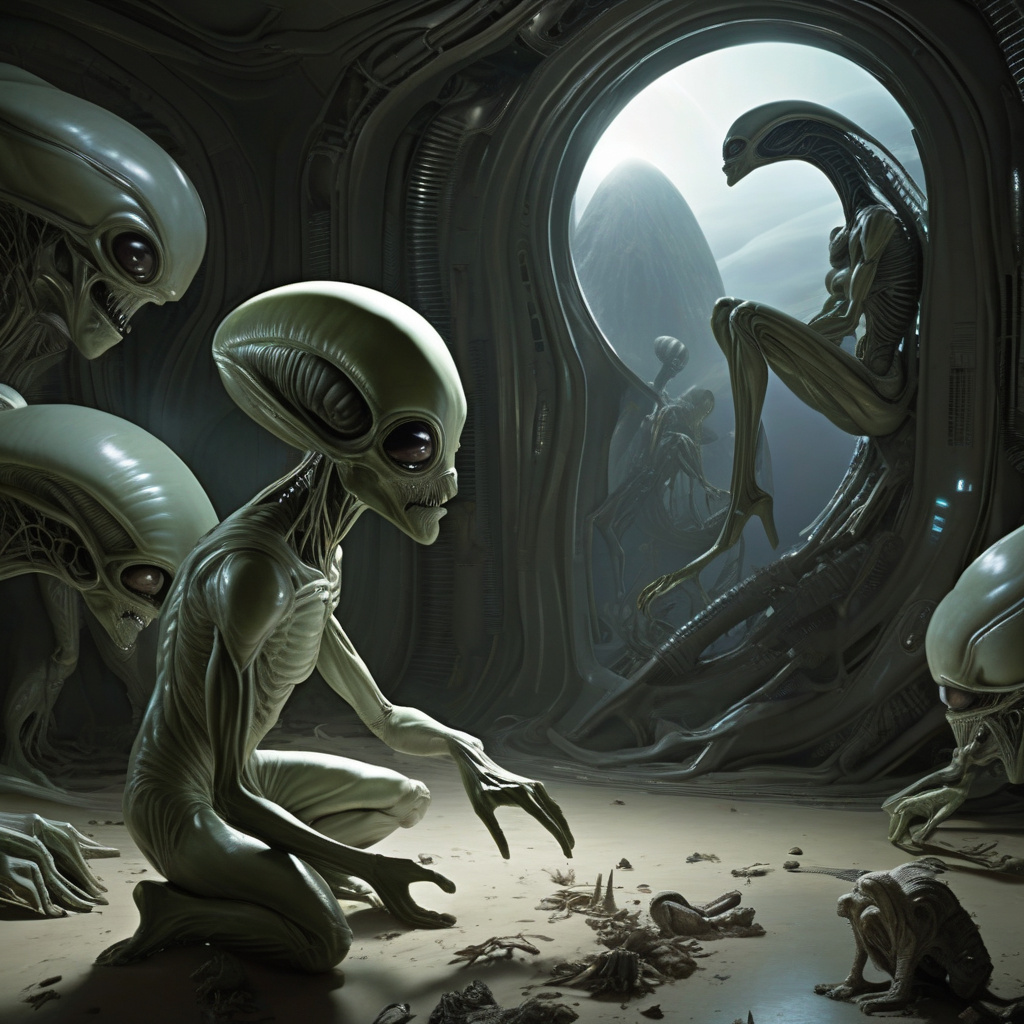
“Alien: Earth” – Is There Enough Alien in This Series?
As an avid fan of the iconic Alien franchise, the anticipation for the latest addition, “Alien: Earth,” was palpable. However, after watching the initial episodes, a lingering feeling of unease settled in. The series seemed to be missing a crucial element – the Alien itself.
One of the defining features of the Alien movies was the slow and suspenseful reveal of the Xenomorph, building up to terrifying encounters that kept viewers on the edge of their seats. In “Alien: Earth,” this crucial aspect seems to have been overlooked. The Xenomorph is introduced early on, robbing the narrative of the tension and mystery that made the original films so captivating.
While the series attempts to delve into new themes and genres, such as transhumanism, it struggles to find its footing. The transition from survival horror to a more psychological narrative might be a bold move, but it risks alienating die-hard fans who crave the heart-pounding thrills of the classic Alien movies.
Moreover, the focus on other extraterrestrial life forms, androids, and hybrids in “Alien: Earth” takes away from the core essence of the franchise – the terrifying presence of the Xenomorph. While diversity in storytelling is commendable, it shouldn’t come at the cost of diluting the very soul of the series.
Noah Hawley, the creative mind behind the series, acknowledges the challenges of adapting a two-hour survival story into a long-form TV show. However, in the pursuit of character development and thematic exploration, the essence of what makes Alien truly unforgettable seems to have been overshadowed.
The characters, especially the hybrid children at the center of the narrative, struggle to carry the weight of the series on their shoulders. The juxtaposition of children’s minds in adult bodies creates an intriguing premise, but one that fails to fully resonate with the audience. It’s challenging to invest in the high-stakes conflicts when the characters at the forefront lack the depth and maturity needed to anchor the story effectively.
Despite its flaws, “Alien: Earth” does have moments of intrigue and visual appeal reminiscent of the earlier films. The retrofuturistic aesthetics and nods to the franchise’s roots offer glimpses of nostalgia for fans. However, these elements alone are not enough to compensate for the absence of the spine-chilling suspense that defined the Alien universe.
As the series progresses, one can’t help but wonder if there’s still a chance for “Alien: Earth” to course-correct and recapture the essence of what made the franchise a sci-fi classic. Perhaps the final episodes hold the key to reigniting the thrill and terror that fans have been yearning for.
In conclusion, while “Alien: Earth” showcases ambition and creativity in its storytelling, it falls short in delivering the right balance of Alien presence and narrative depth. For a series bearing the iconic Alien name, striking that delicate equilibrium between the known and the unknown is essential to keep audiences engaged and enthralled. Let’s hope that in the remaining episodes, “Alien: Earth” finds its way back to the heart of what made the Xenomorph a truly unforgettable entity in the vast universe of science fiction.