
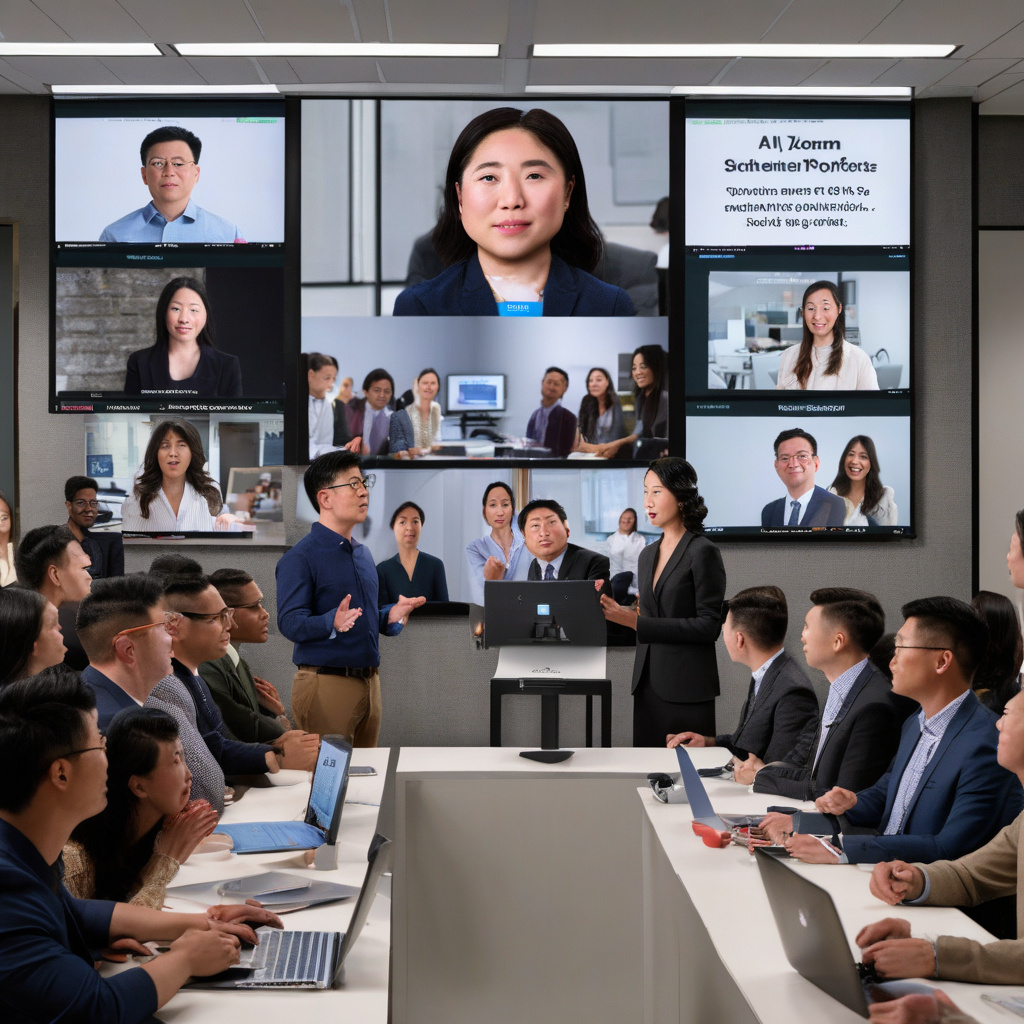
In a recent statement, Zoom CEO Eric Yuan has boldly predicted that the integration of Artificial Intelligence (AI) into our work processes will revolutionize the traditional workweek. According to Yuan, advancements in AI technology will streamline tasks, boost productivity, and ultimately condense our work schedule to just three to four days a week. This vision of a shorter workweek fueled by AI innovations has sparked discussions among professionals worldwide, prompting us to ponder the potential implications and benefits of such a transformative shift.
The concept of a condensed workweek is not entirely novel. Over the years, various studies and experiments have explored the idea of optimizing work schedules to enhance efficiency and employee well-being. However, Yuan’s assertion that AI will play a pivotal role in driving this change introduces a compelling angle to the conversation. By harnessing the power of AI algorithms, businesses can automate repetitive tasks, analyze data at unprecedented speeds, and facilitate smarter decision-making processes. This increased automation and efficiency could significantly reduce the time required to complete tasks, thereby freeing up valuable time for employees.
Imagine a scenario where mundane administrative duties, such as data entry or scheduling, are seamlessly handled by AI-powered systems, allowing employees to focus on more strategic and creative aspects of their roles. This shift not only increases job satisfaction by enabling workers to engage in meaningful and challenging work but also enhances overall productivity by leveraging AI’s capabilities to augment human performance. As AI continues to evolve and refine its capabilities, the potential for a shorter workweek becomes increasingly tangible.
However, while the prospect of a condensed workweek may sound appealing, it also raises important questions about the broader impact on society, economy, and work culture. How will businesses adapt to this new paradigm, ensuring operational continuity and customer satisfaction within a compressed timeframe? Will employees experience heightened job satisfaction and work-life balance, or will the pressure to accomplish more in less time lead to burnout and stress? These are crucial considerations that need to be addressed as we navigate towards a future shaped by AI-driven efficiencies.
Moreover, the transition to a shorter workweek driven by AI necessitates a fundamental shift in how we perceive work and productivity. It challenges traditional notions of the correlation between hours worked and output achieved, emphasizing the importance of outcomes and results over mere presence and effort. This shift towards outcome-driven work cultures may require organizations to redefine performance metrics, foster a culture of trust and autonomy, and prioritize employee well-being to ensure a successful transition.
In conclusion, Zoom CEO Eric Yuan’s assertion that AI will shorten our workweek presents a thought-provoking glimpse into the future of work. By leveraging AI technologies to streamline processes, eliminate repetitive tasks, and enhance productivity, businesses have the potential to reshape work schedules and empower employees to achieve more in less time. However, this transformation also necessitates careful consideration of the broader implications on work culture, employee well-being, and societal norms. As we stand on the cusp of a new era driven by AI innovation, embracing the possibilities of a shorter workweek requires a balanced approach that prioritizes efficiency, effectiveness, and the human element in our evolving work landscape.