
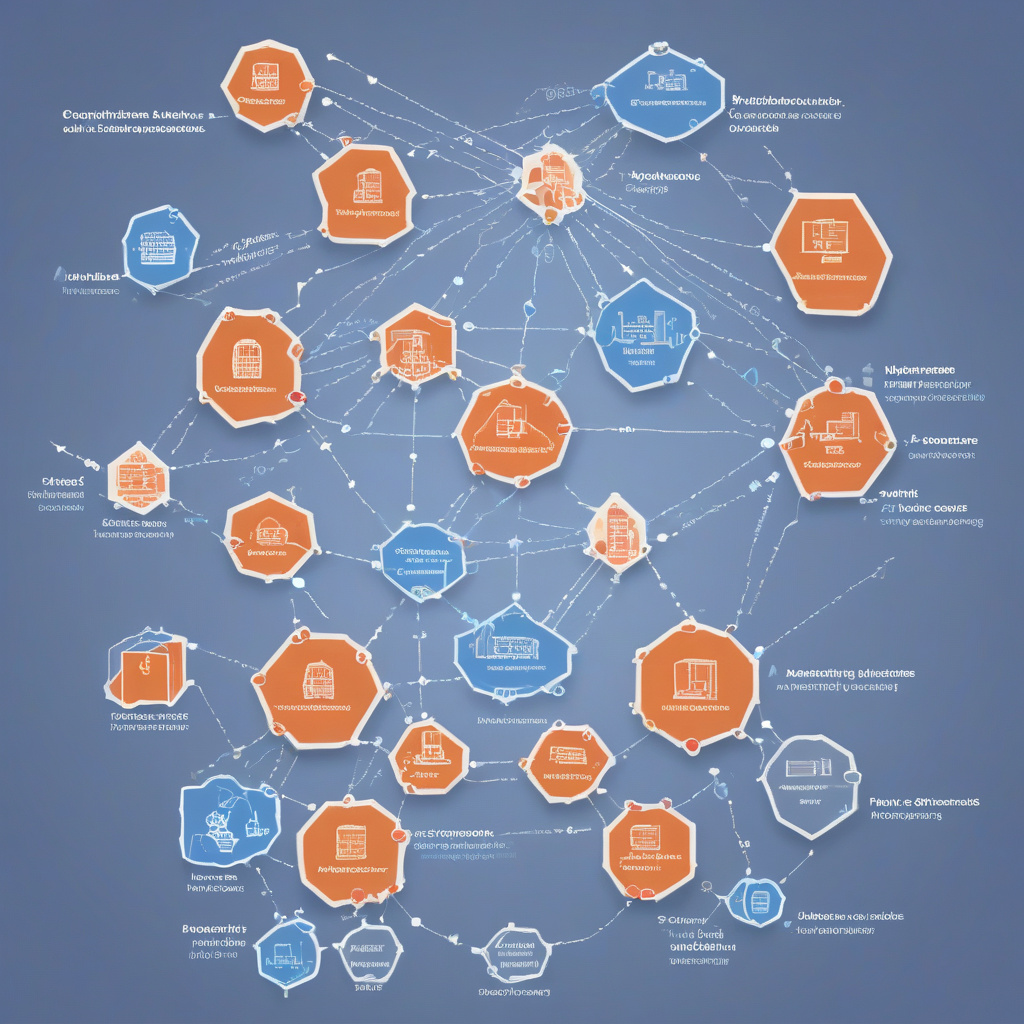
In the realm of modern software development, the adoption of microservices has revolutionized the way applications are designed and deployed. This approach, which involves breaking down applications into smaller, independent services, offers unparalleled flexibility and scalability. Each service operates as a separate entity, allowing for diverse technology stacks, rapid development cycles, and independent scaling, all crucial aspects of building robust and agile applications.
However, while the benefits of microservices are undeniable, they also introduce new challenges, particularly in terms of operational complexity and fault tolerance. Unlike traditional monolithic architectures, where failures are often contained within a single runtime environment, microservices communicate over networks. This distributed nature means that every interaction between services brings with it the potential for latency, partial failures, or even complete outages.
When a critical dependency encounters issues, such as increased latency or unavailability, the repercussions can be significant. These problems can cascade through the system, leading to a domino effect of failures that ultimately impact the user experience and may result in widespread outages. To address these challenges and build resilient microservices architectures, developers turn to a combination of technologies and best practices.
One key technology that plays a vital role in ensuring fault tolerance in microservices architectures is Kubernetes. Kubernetes, an open-source container orchestration platform, provides developers with the tools needed to automate deployment, scaling, and management of containerized applications. By leveraging Kubernetes, teams can create self-healing environments that automatically respond to failures, ensuring continuous availability and performance.
Another essential component in building fault-tolerant microservices architectures is gRPC. gRPC is a high-performance, open-source remote procedure call (RPC) framework that enables seamless communication between services. With support for multiple programming languages and robust serialization mechanisms, gRPC simplifies the development of microservices while ensuring efficient and reliable inter-service communication.
In addition to Kubernetes and gRPC, the use of circuit breakers is crucial for maintaining system stability in the face of failures. Circuit breakers act as a safety mechanism that monitors service interactions and prevents cascading failures by isolating problematic services. When a service experiences issues, the circuit breaker “trips,” redirecting traffic away from the failing component and allowing the system to gracefully degrade without impacting other services.
By combining Kubernetes for orchestration, gRPC for efficient communication, and circuit breakers for fault isolation, developers can construct resilient microservices architectures that can withstand failures and deliver a seamless user experience. These technologies work in harmony to ensure that applications remain available, performant, and reliable, even in the face of adversity.
In conclusion, the adoption of microservices has undoubtedly transformed the landscape of software development, offering unparalleled flexibility and scalability. However, with these benefits come new challenges, particularly in terms of fault tolerance and system reliability. By leveraging technologies such as Kubernetes, gRPC, and circuit breakers, developers can overcome these challenges and build fault-tolerant microservices architectures that deliver exceptional performance and reliability.