
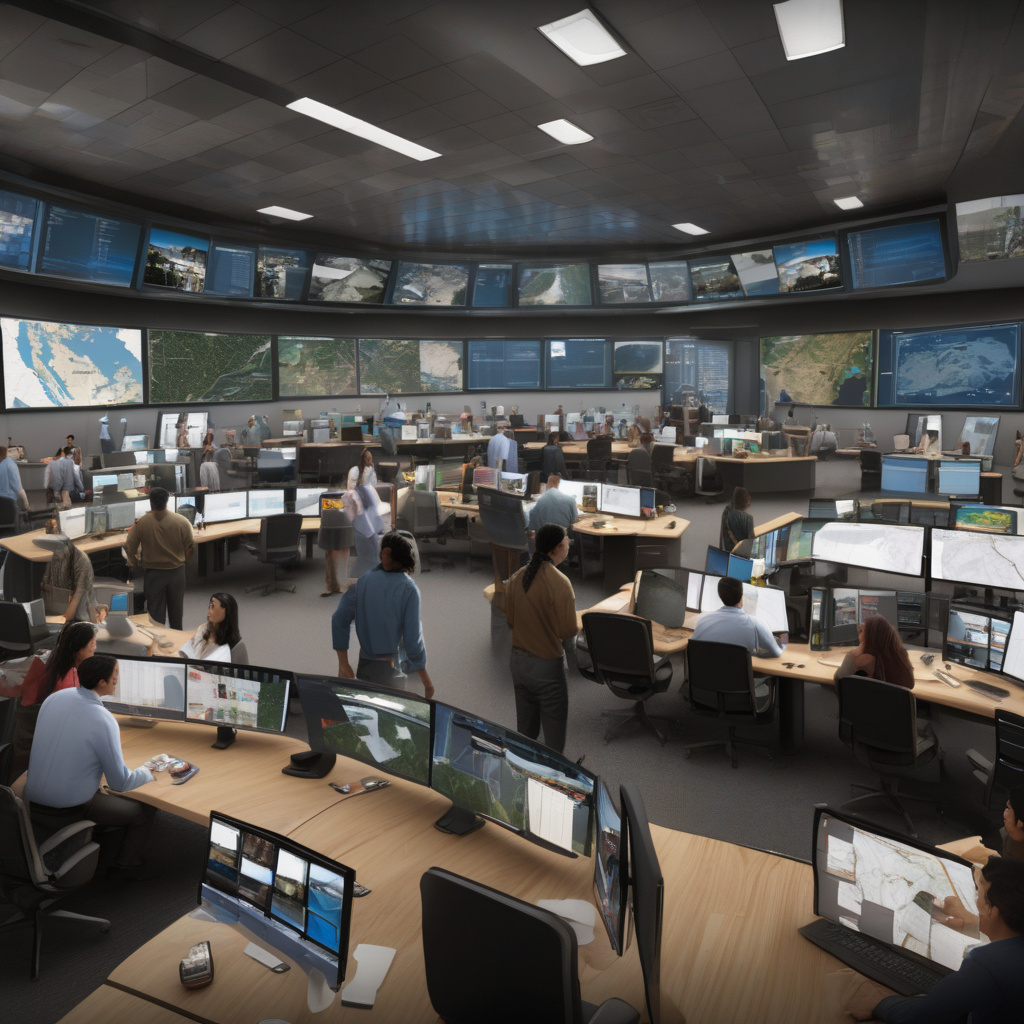
In the dynamic landscape of incident command, the integration of AI agents marks a pivotal shift towards efficiency, accuracy, and enhanced decision-making. These intelligent systems are revolutionizing how teams respond to crises, leveraging cutting-edge technology to streamline operations and mitigate risks. Let’s explore four key ways AI agents are reshaping the incident command landscape.
- Real-time Data Analysis: AI agents excel at processing vast amounts of data in real-time, allowing incident commanders to make informed decisions swiftly. By analyzing data from various sources such as sensors, cameras, and historical records, AI agents can provide actionable insights to command teams. For example, during a natural disaster, AI agents can analyze weather patterns, infrastructure damage, and population distribution to prioritize rescue efforts effectively.
- Predictive Analytics: One of the most powerful capabilities of AI agents is their ability to forecast potential outcomes based on historical data and trend analysis. By leveraging predictive analytics, incident commanders can anticipate evolving situations and proactively allocate resources. For instance, in a cybersecurity incident, AI agents can detect anomalous patterns in network traffic and predict potential cyber threats before they escalate, enabling preemptive countermeasures.
- Automated Resource Allocation: AI agents streamline resource allocation by recommending optimal deployment strategies based on real-time demand and availability. These systems consider factors such as geographical proximity, skill sets, and equipment requirements to ensure efficient resource utilization. In a medical emergency, AI agents can analyze patient data, ambulance locations, and hospital capacities to recommend the nearest and most suitable medical facility for each case, optimizing response times and patient outcomes.
- Enhanced Communication: AI agents facilitate seamless communication among distributed teams by providing translation services, transcribing conversations, and summarizing critical information in real-time. By breaking down language barriers and consolidating complex data into actionable insights, AI agents improve collaboration and coordination during high-pressure scenarios. For instance, in a multinational incident response operation, AI agents can translate messages between teams speaking different languages, ensuring clear and effective communication.
In conclusion, AI agents are revolutionizing incident command by enhancing data analysis, predictive capabilities, resource allocation, and communication processes. By harnessing the power of artificial intelligence, command teams can respond to emergencies more effectively, minimize response times, and optimize resource utilization. As technology continues to evolve, integrating AI agents into incident command systems will be essential for staying ahead of complex and rapidly evolving crisis scenarios.