
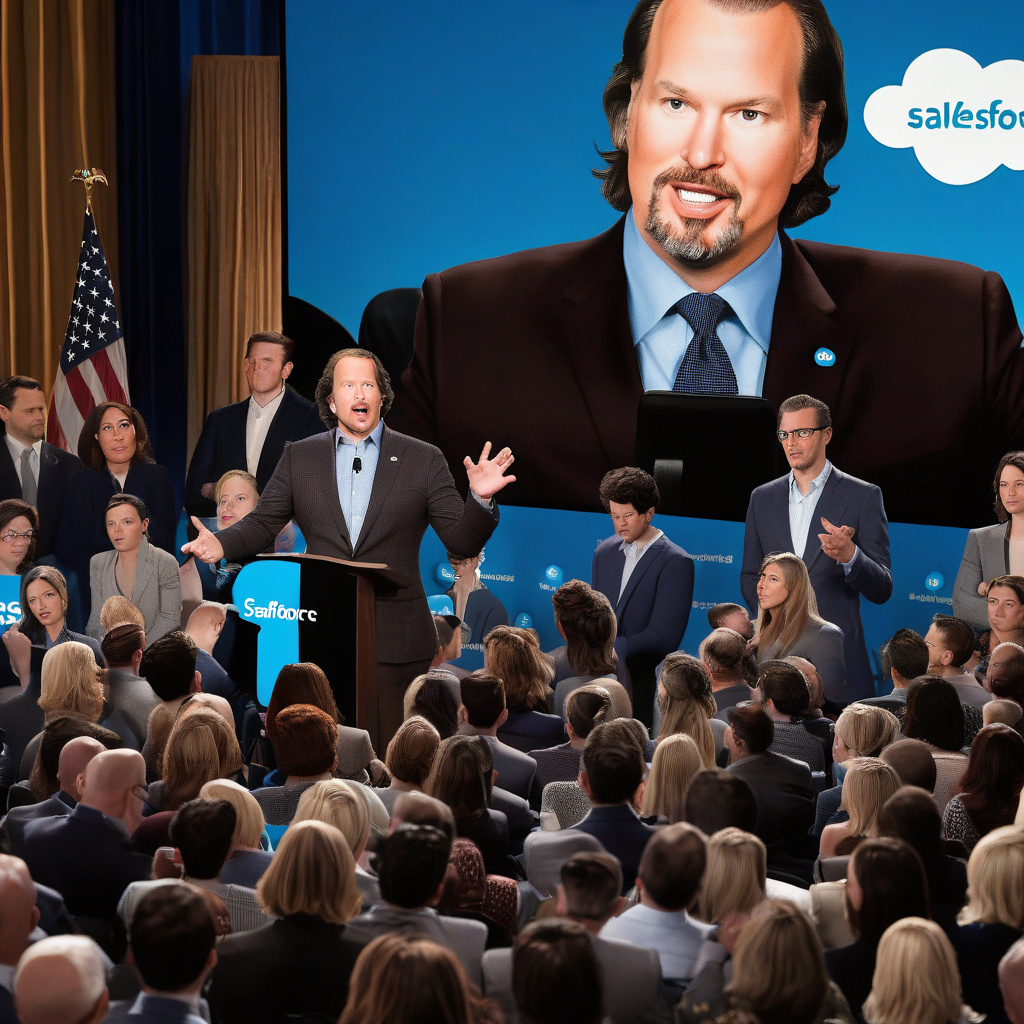
In a surprising turn of events, Salesforce CEO Marc Benioff recently advocated for the National Guard to patrol the streets of San Francisco, sending shockwaves not only through the tech community but also stunning his own PR team. This bold suggestion marks a significant departure from the typical Silicon Valley stance and raises important questions about the extent to which tech leaders are willing to align themselves with political figures like President Trump.
Benioff’s unexpected proposal underscores a broader trend in Silicon Valley, where some executives have been more willing to engage with the current administration. However, the call for military intervention in San Francisco represents a particularly drastic step, highlighting the potential consequences of such a shift in approach. As one of the most prominent figures in the tech industry, Benioff’s actions may set a precedent for other Bay Area CEOs to reevaluate their stance on federal involvement in local matters.
The implications of Benioff’s statement go beyond mere rhetoric, signaling a willingness to bridge the gap between the tech sector and the political establishment. By openly supporting the deployment of the National Guard, Benioff has ignited a debate within the industry about the appropriate boundaries between technology, business, and government. This move challenges traditional perceptions of Silicon Valley as a bastion of progressive values, prompting reflection on the evolving dynamics between tech leaders and policymakers.
The question now facing the Bay Area tech community is whether other CEOs will follow Benioff’s lead and advocate for federal intervention in their own regions. As the influence of technology companies continues to grow, so too does their responsibility to navigate complex societal issues with care and foresight. Benioff’s bold stance serves as a litmus test for the tech industry’s willingness to engage with contentious political topics and collaborate with government entities.
In a landscape where innovation often outpaces regulation, the intersection of technology and public policy becomes increasingly critical. Benioff’s call for the National Guard to patrol San Francisco underscores the need for tech leaders to consider the broader implications of their statements and actions. As the debate unfolds, it will be essential for CEOs to weigh the potential impact of their advocacy on both their companies and the communities they serve.
Ultimately, Benioff’s advocacy for federal troops in San Francisco represents a pivotal moment for the tech industry, prompting a reevaluation of its relationship with governmental authorities. Whether other tech CEOs will follow suit remains to be seen, but one thing is clear: the convergence of technology, politics, and social responsibility has never been more pronounced. As Silicon Valley grapples with these complex issues, the decisions made by its leaders will shape not only the future of the industry but also the broader societal landscape in which they operate.