
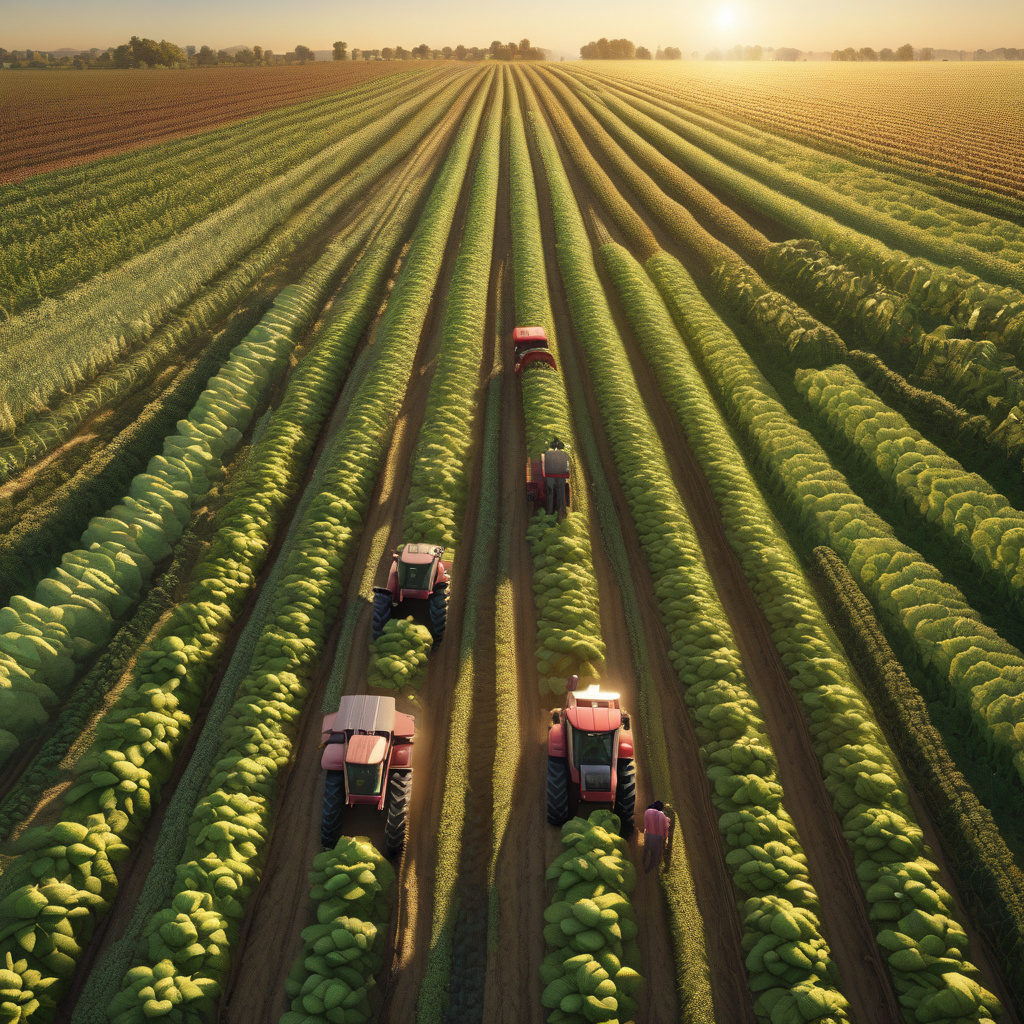
Feeding a growing global population is one of the 21st century’s greatest challenges. The United Nations predicts that by 2050, the world’s population will reach nearly 10 billion people, necessitating a 70% increase in food production. To meet this demand sustainably, the agriculture industry is turning to Artificial Intelligence (AI) to revolutionize farming practices.
AI technologies are transforming agritech by enhancing efficiency, productivity, and sustainability in various ways. One significant application of AI in agriculture is precision farming. Through the use of sensors, drones, and autonomous vehicles, AI can collect and analyze data to precisely monitor crop health, soil conditions, and weather patterns. By applying machine learning algorithms to this data, farmers can make informed decisions on irrigation, fertilization, and pest control, optimizing crop yields while minimizing environmental impact.
For instance, AI-powered systems can analyze satellite imagery to detect early signs of crop diseases or nutrient deficiencies, enabling farmers to take proactive measures to prevent yield loss. This not only improves productivity but also reduces the need for harmful pesticides and fertilizers, promoting sustainable agricultural practices. By harnessing AI, farmers can achieve higher crop yields with fewer resources, ultimately contributing to global food security.
Moreover, AI is revolutionizing livestock management through the development of smart farming solutions. By utilizing wearable devices and IoT sensors, farmers can remotely monitor the health, behavior, and productivity of individual animals in real-time. AI algorithms can process this data to detect signs of illness, optimize feeding schedules, and improve breeding practices, leading to healthier livestock and higher-quality meat and dairy products.
In addition to on-farm applications, AI is also reshaping the supply chain and distribution networks in the agriculture industry. AI-powered systems can analyze market trends, consumer preferences, and logistical data to optimize food production, storage, and transportation processes. By predicting demand fluctuations and streamlining inventory management, AI helps reduce food waste and ensures a more efficient allocation of resources throughout the food supply chain.
Overall, the integration of AI in agritech holds immense potential to address the challenges of feeding a growing population while promoting sustainability and resource efficiency. By leveraging AI technologies to make data-driven decisions, optimize production processes, and enhance crop and livestock management practices, the agriculture industry can meet the increasing global demand for food in a more sustainable and efficient manner.
In conclusion, AI is not only transforming agritech but also playing a crucial role in shaping the future of food production. As we look towards a world with a larger population and finite resources, embracing AI in agriculture is not just an option but a necessity. By harnessing the power of AI, we can cultivate a more sustainable and food-secure future for generations to come.