
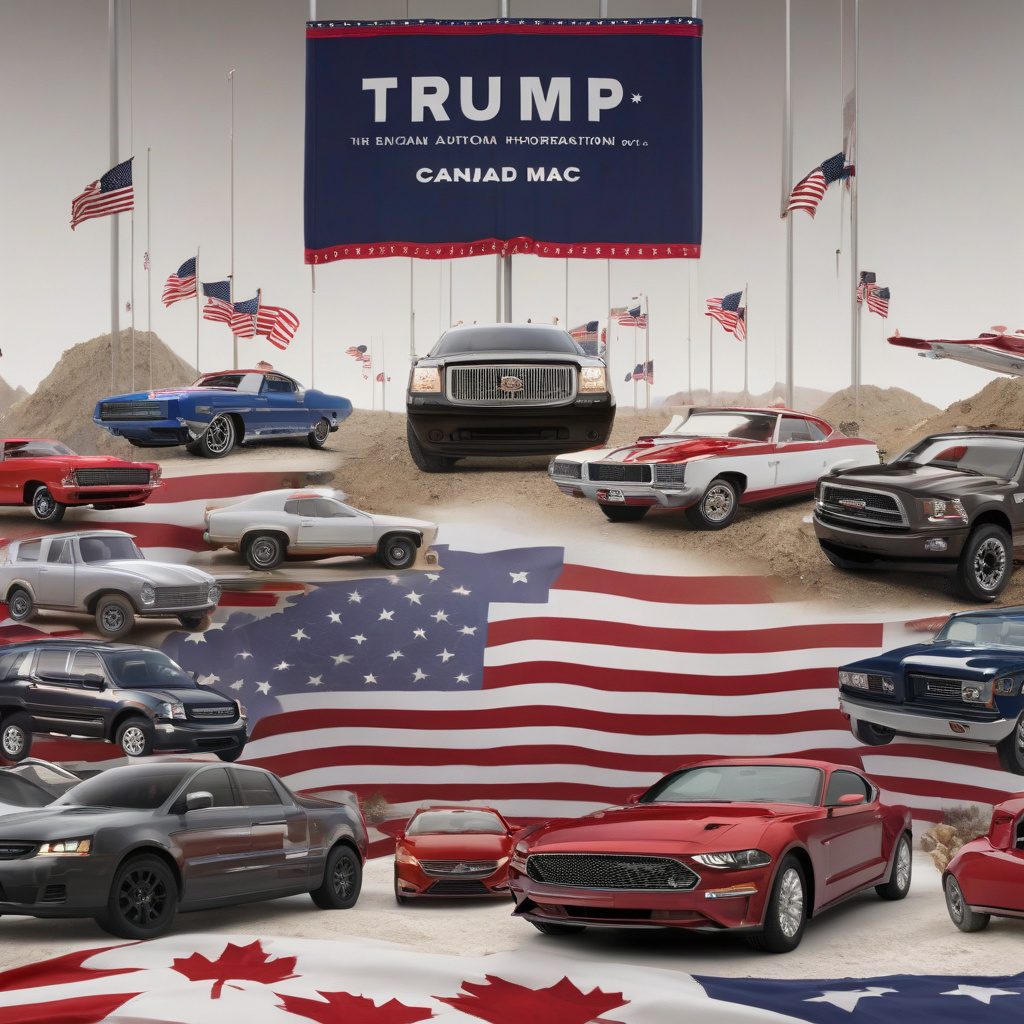
Trump’s Tariff Reprieve: A Strategic Move for Automakers
In a recent development, President Donald Trump has granted a one-month delay on tariffs for automobile imports from Canada and Mexico. This decision comes on the heels of appeals from executives at major automakers like General Motors, Ford, and Stellantis. The condition attached to this reprieve is significant – automakers are expected to relocate any offshore operations to the United States by April 2.
This move indicates a strategic push by the Trump administration to incentivize automakers to shift their production bases to the United States. By leveraging tariffs as a bargaining tool, the government aims to bolster domestic manufacturing and create more job opportunities within the country. This decision aligns with Trump’s broader agenda of prioritizing American interests and boosting the national economy.
The Big Three automakers – General Motors, Ford, and Stellantis – play a pivotal role in the automotive industry, with operations spanning across multiple countries. The tariff reprieve serves as a compelling catalyst for these companies to reconsider their manufacturing strategies and potentially consolidate their production facilities in the United States.
For automakers, relocating offshore operations involves a series of complex considerations. From supply chain logistics to workforce restructuring, this transition demands meticulous planning and strategic execution. However, the allure of tariff exemptions and the promise of favorable trade conditions within the US market could outweigh the challenges associated with such a significant operational shift.
Moreover, this decision not only impacts the automotive sector but also sends ripples across the broader landscape of international trade and economic policies. It underscores the interplay between governmental regulations, corporate strategies, and global market dynamics. As automakers navigate these intricate waters, they must assess the long-term implications of their operational decisions in light of evolving trade scenarios.
In conclusion, Trump’s tariff reprieve presents automakers with a time-sensitive opportunity to realign their operations and embrace a more US-centric manufacturing approach. The clock is ticking, and the April 2 deadline looms large. How automakers respond to this mandate will not only shape their individual trajectories but also contribute to the larger narrative of economic resilience and national competitiveness.
As the automotive industry braces for this transformative period, all eyes are on the Big Three and their strategic maneuvers in the coming weeks. The impact of this tariff reprieve extends far beyond trade dynamics – it symbolizes a pivotal moment in the evolution of global supply chains and the recalibration of industrial landscapes. The countdown to April 2 begins, marking a crucial phase in the journey towards a redefined automotive manufacturing paradigm.