
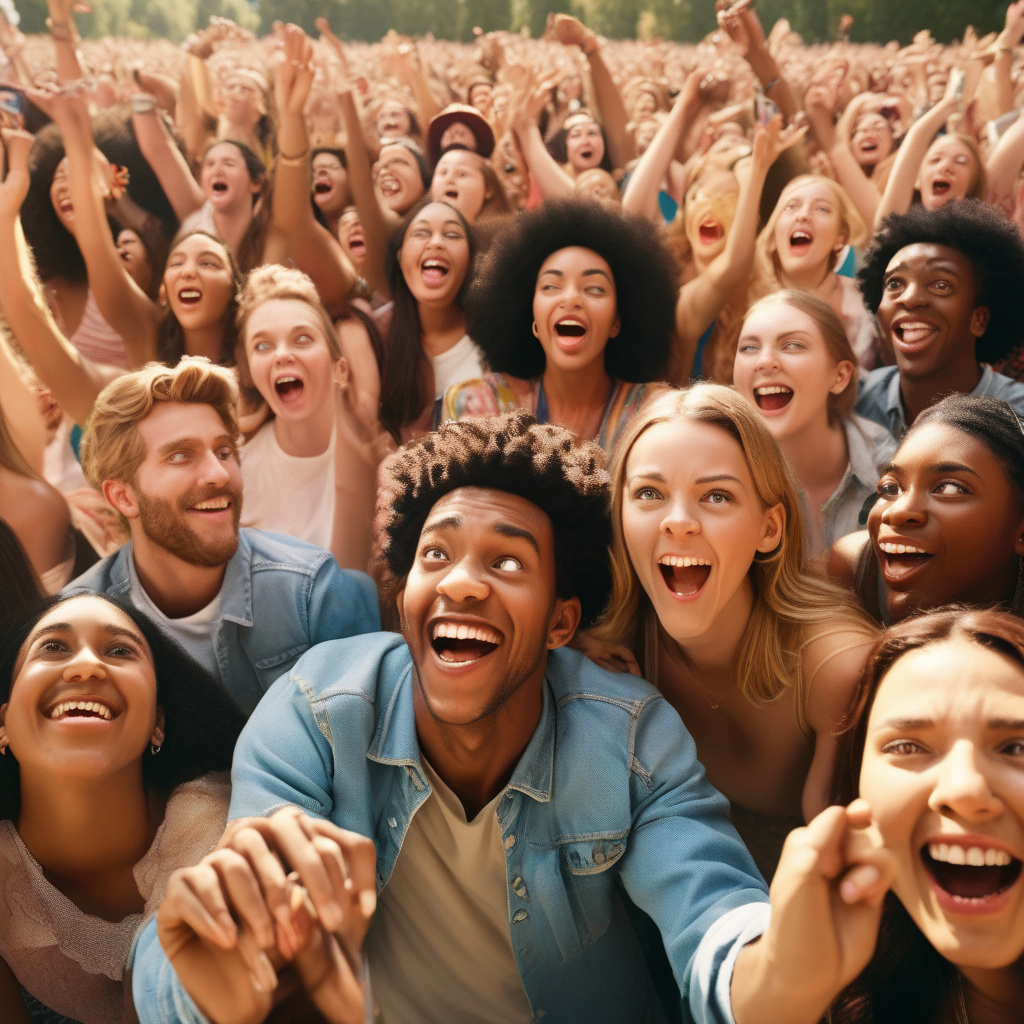
In the ever-evolving landscape of technology, the line between reality and artificial intelligence continues to blur. Recently, fans have raised eyebrows at a video shared by the charismatic Will Smith from his tour. Accusations of the video being AI-generated have sparked a wave of discussions and debates across social media platforms. However, as is often the case in the realm of digital content, the truth behind the video is not as straightforward as it may seem.
At first glance, the video in question appears to showcase a vibrant crowd enthusiastically cheering for the renowned actor and entertainer. The seamless synchronization and energetic response from the audience led many to ponder whether such a reaction could be orchestrated by advanced AI algorithms. The skepticism surrounding AI’s capabilities to mimic human behavior with such precision is not unfounded, given the rapid advancements in this field.
AI technologies, particularly in the realm of deep learning and natural language processing, have made significant strides in generating content that closely resembles human-created media. From writing articles to composing music, AI has proven its capacity to mimic various forms of creative expression. This advancement has not only revolutionized content creation processes but has also raised ethical questions regarding the authenticity of digital content.
In the case of Will Smith’s crowd video, the debate revolves around the authenticity of the audience’s response. While AI-generated content can simulate realistic behaviors and interactions, the nuances of human emotions and spontaneity remain challenging to replicate entirely. The subtle cues and genuine reactions that characterize human engagement are often the missing elements in AI-generated content, leading to discernible discrepancies upon closer inspection.
Despite the speculation surrounding the video’s authenticity, it serves as a testament to the growing influence of AI in shaping digital content. Whether intentionally created to spark conversations or inadvertently shared without context, the video underscores the need for a critical lens when consuming media in the digital age. As AI technologies continue to evolve, distinguishing between genuine human experiences and AI-generated simulations becomes a crucial skill in navigating the vast landscape of online content.
In the realm of entertainment and celebrity culture, the use of AI to enhance or manipulate content is not a new phenomenon. From deepfake videos to AI-generated music, artists and influencers have explored innovative ways to leverage technology for creative expression. While these endeavors push the boundaries of traditional content creation, they also raise ethical considerations regarding transparency and authenticity in the digital realm.
As fans and critics alike dissect Will Smith’s crowd video, the underlying question remains: does it matter whether the video was AI-generated or not? The impact of digital content, regardless of its origins, lies in its ability to engage, inspire, and provoke thought. Whether the cheers from the crowd were orchestrated by AI algorithms or genuine audience members, the emotional resonance it evokes transcends the methods of its creation.
In a world where technology continues to shape our interactions and experiences, the blurred lines between AI and human creativity compel us to rethink our perceptions of authenticity and innovation. As we navigate this digital landscape, embracing the convergence of AI and human expression opens doors to new possibilities and challenges. Whether it’s a crowd video from a celebrity tour or a piece of music composed by algorithms, the interplay between AI and human ingenuity invites us to explore the endless possibilities of creativity in the digital age.