

Uber’s recent upgrade to its CacheFront architecture, enabling it to manage a staggering 150 million reads every second, marks a significant milestone in the realm of performance optimization. This enhancement not only showcases Uber’s commitment to innovation but also serves as a testament to the power of strategic technological advancements in meeting growing demands.
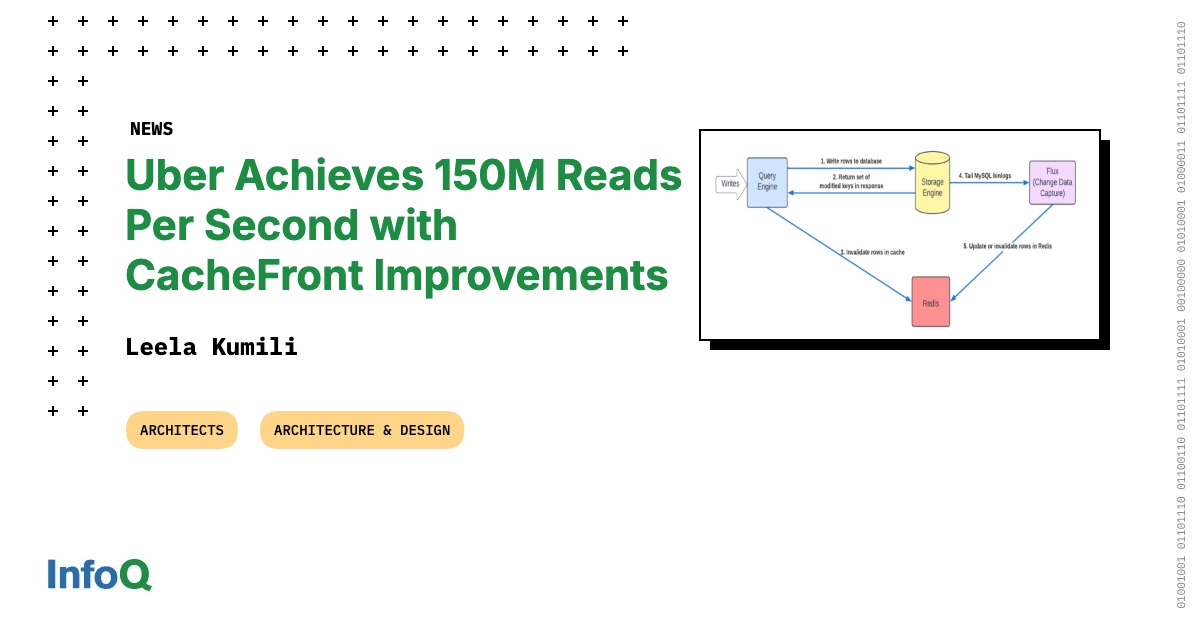
The core of this achievement lies in a series of meticulous improvements implemented within CacheFront. By integrating Flux for MySQL binlog tailing, Uber has effectively streamlined its processes, ensuring enhanced consistency and a noticeable reduction in stale reads. This integration plays a pivotal role in augmenting the overall efficiency of the system, thereby laying a robust foundation for seamless operations.
Moreover, the revamp extends beyond mere integration, encompassing enhancements to the storage engine. These refinements serve to fortify the infrastructure, enabling it to support the influx of reads with unparalleled agility and reliability. By bolstering the storage engine, Uber has not only optimized performance but has also future-proofed its architecture against potential scalability challenges.
In addition to these structural modifications, Uber has introduced Cache Inspector, a sophisticated tool designed for monitoring and optimization purposes. This innovative addition empowers Uber to proactively identify bottlenecks, fine-tune performance parameters, and ensure optimal resource allocation. Through the deployment of Cache Inspector, Uber has demonstrated its proactive approach towards maintaining peak efficiency and responsiveness.
The implications of Uber’s achievement extend far beyond a mere numerical milestone. By successfully handling 150 million reads per second, Uber has set a new benchmark for performance scalability in the digital landscape. This feat not only underscores Uber’s technical prowess but also serves as a beacon of inspiration for organizations striving to navigate the complexities of high-traffic systems.
From a broader perspective, Uber’s success with CacheFront improvements elucidates the transformative potential of well-executed technological enhancements. By investing in refining its architecture, Uber has not only elevated its operational capabilities but has also paved the way for a more streamlined and resilient infrastructure.
In conclusion, Uber’s accomplishment of handling 150 million reads per second through CacheFront optimizations stands as a testament to the profound impact of strategic technological investments. This achievement not only highlights Uber’s unwavering commitment to excellence but also underscores the pivotal role of innovation in driving operational efficiency and scalability. As organizations continue to navigate the evolving digital landscape, Uber’s journey serves as a compelling narrative of leveraging technology to conquer challenges and redefine benchmarks.