
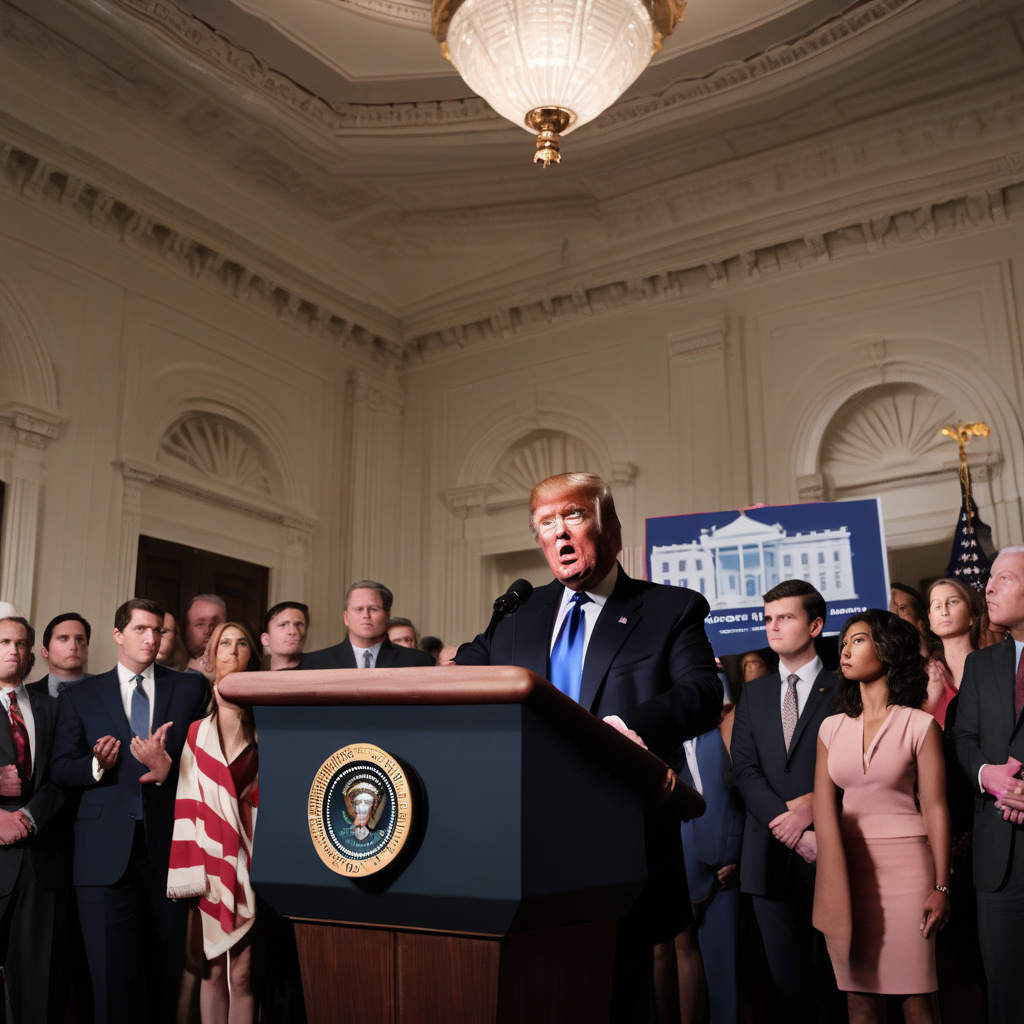
President Donald J. Trump’s recent criticism of the CHIPS Act has sparked controversy within the tech industry. In his address to Congress, Trump labeled the Act as “horrible,” advocating for its defunding and the allocation of remaining funds towards reducing the national debt. This stance directly opposes the Act’s purpose of bolstering semiconductor manufacturing and development in the United States.
Trump’s preference for tariffs over financial incentives to attract semiconductor manufacturers reflects his belief that protecting American businesses and imposing tariffs on imports will drive domestic production. His approach stands in stark contrast to the CHIPS Act’s objective of reducing reliance on foreign semiconductor supply chains and enhancing national security and innovation in critical sectors like electronics, defense, and healthcare.
The CHIPS Act, enacted in 2022 under President Biden, aims to strengthen the U.S. economy by fostering on-shore chip manufacturing. Despite the allocation of around $32 billion from the Act, these funds have yet to be fully dispersed. Key industry players such as Intel, Samsung, Micron, TSMC, and Texas Instruments have committed substantial investments in new U.S. chip fabrication plants as recipients of CHIPS Act funding.
However, Trump’s recent push for tariffs and criticism of the Act raise concerns about the future of semiconductor development in the U.S. Robert Maire, president of Semiconductor Advisors, warned that Trump’s strategy shift towards tariffs could hinder the Act’s objectives and impact partnerships like TSMC’s $100 billion investment in U.S. chip facilities.
Industry experts like Andrew Tsai and Jack Gold caution against repealing the CHIPS Act, emphasizing that incentives are vital for fostering technological advancement and economic growth. Gold highlights the historical significance of government support in driving innovation, citing the space program as a prime example.
As the debate surrounding the CHIPS Act unfolds, the tech industry remains at a crossroads, balancing the need for domestic semiconductor production with the complexities of global trade dynamics. The outcome of this debate will significantly impact the future of U.S. technological competitiveness and innovation in the semiconductor sector.