Blog

  • OpenAI Introduces New Speech Models for Transcription and Voice Generation

    OpenAI, the trailblazer in AI research, has once again pushed the boundaries of technology with its latest release of cutting-edge speech models. In a bid to revolutionize transcription accuracy and voice generation, OpenAI has unveiled new speech-to-text and text-to-speech models within its API. This development marks a significant leap forward in the realm of automated speech applications, promising more precise transcriptions and greater customization options for AI-generated voices.

    One of the key highlights of these new models is their enhanced transcription accuracy. By leveraging advanced machine learning algorithms, OpenAI has fine-tuned its speech-to-text model to deliver more precise and reliable transcriptions. This improvement is poised to benefit a wide range of industries, from healthcare and finance to education and entertainment, where accurate transcription is paramount.

    Moreover, OpenAI’s focus on offering more control over AI-generated voices sets these new models apart. Users now have the flexibility to tailor the characteristics of synthetic voices to better suit their specific needs and preferences. This level of customization opens up a plethora of possibilities for creating engaging and personalized speech applications that resonate with users on a deeper level.

    The implications of these advancements extend far beyond mere transcription and voice generation. With the ability to adapt to different environments and use cases, OpenAI’s new speech models pave the way for more immersive and interactive user experiences. Whether it’s powering virtual assistants, interactive voice response systems, or accessibility tools, the enhanced capabilities of these models promise to elevate the performance and user engagement of a wide array of applications.

    For developers and organizations looking to integrate state-of-the-art speech technologies into their products and services, OpenAI’s latest offerings present a compelling opportunity. By tapping into the power of these advanced models, businesses can unlock new possibilities for innovation and differentiation in an increasingly competitive landscape. From enhancing customer interactions to streamlining workflows, the potential applications of OpenAI’s speech models are as diverse as they are impactful.

    In conclusion, OpenAI’s introduction of new speech models for transcription and voice generation signifies a significant milestone in the evolution of AI-powered speech technologies. With a focus on enhancing accuracy, customization, and adaptability, these models are set to redefine the way we interact with automated speech applications. As we look towards a future where AI plays an ever-expanding role in our daily lives, the advancements made by OpenAI serve as a testament to the boundless potential of artificial intelligence in transforming the way we communicate and engage with technology.
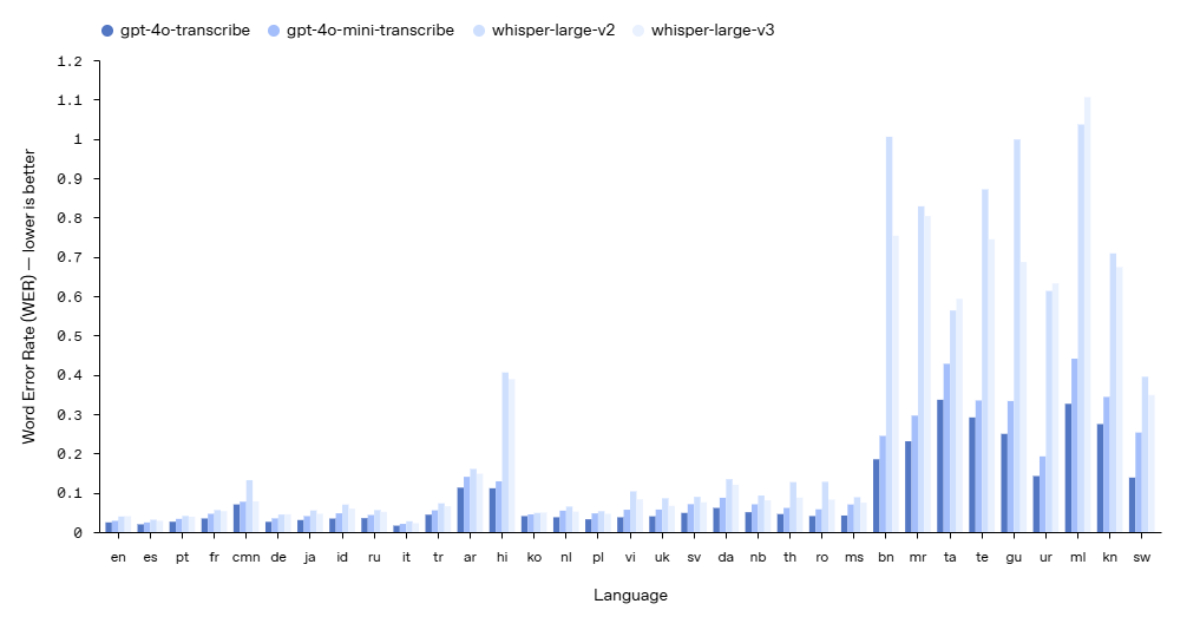
  • OpenAI Introduces New Speech Models for Transcription and Voice Generation

    OpenAI Unveils Cutting-Edge Speech Models for Enhanced Transcription and Voice Generation

    OpenAI, a trailblazer in artificial intelligence research, has recently unveiled its latest speech-to-text and text-to-speech models through its API. This development marks a significant leap forward in the realm of transcription accuracy and voice generation control. By prioritizing these aspects, OpenAI is poised to revolutionize automated speech applications for a myriad of industries and applications.

    Enhanced Transcription Accuracy

    One of the key highlights of OpenAI’s new speech models is their unparalleled transcription accuracy. By leveraging advanced machine learning algorithms and neural networks, these models excel in converting spoken language into text with remarkable precision. This breakthrough is a game-changer for industries reliant on transcription services, such as healthcare, legal, and media, where accuracy is paramount.

    In practical terms, imagine a medical professional dictating patient notes with complex terminology. With OpenAI’s enhanced speech-to-text model, every nuanced detail is transcribed flawlessly, reducing the margin of error and streamlining documentation processes. This level of accuracy not only boosts efficiency but also enhances data integrity and accessibility.

    Empowering Voice Generation Control

    Moreover, OpenAI’s updated text-to-speech models offer users unprecedented control over AI-generated voices. This newfound flexibility enables developers and businesses to tailor voice characteristics, such as pitch, tone, and cadence, to align with specific branding or communication requirements. By customizing these elements, organizations can create more engaging and personalized experiences for their target audience.

    For instance, a customer service chatbot powered by OpenAI’s text-to-speech model can now deliver responses in a voice that resonates with the brand’s identity, fostering stronger customer connections. This level of voice customization not only elevates user engagement but also reinforces brand consistency across various touchpoints.

    Adaptable Solutions for Diverse Use Cases

    OpenAI’s commitment to enhancing automated speech applications extends to ensuring adaptability across diverse environments and use cases. Whether it’s transcribing multilingual conversations in real-time or generating lifelike voices for virtual assistants, these new models offer unparalleled versatility and performance.

    By catering to a wide range of industries, including education, entertainment, and accessibility, OpenAI’s speech models unlock a wealth of possibilities for innovation and efficiency. Imagine a language learning app that provides real-time translations with utmost accuracy or a podcast platform that seamlessly generates natural-sounding voices to captivate listeners. With OpenAI’s cutting-edge solutions, the potential for transformative applications is limitless.

    In conclusion, OpenAI’s latest speech models represent a significant advancement in the field of automated speech technology. By prioritizing transcription accuracy, voice generation control, and adaptability, these models pave the way for enhanced user experiences, streamlined workflows, and innovative applications across various industries. As organizations embrace these state-of-the-art solutions, the future of automated speech technology looks more promising than ever before.

    With OpenAI leading the charge, the possibilities are endless, and the impact is bound to be profound.

    Image Source: InfoQ

  • Oracle under fire for its handling of separate security incidents

    Oracle, a prominent player in the tech industry, is currently facing intense scrutiny for its handling of two distinct security incidents. The company’s response—or lack thereof—to these breaches has sparked widespread concern among IT and cybersecurity professionals.

    In the first incident, Oracle has adamantly denied any breach, despite compelling evidence suggesting otherwise. This denial has left many questioning the transparency and accountability of the tech giant. By dismissing clear indicators of a breach, Oracle risks undermining the trust of its customers and the broader tech community.

    Adding to the controversy, Oracle finds itself in hot water again as it embarks on notifying healthcare customers about a separate patient data breach. The sensitivity of patient data makes this breach particularly alarming, raising significant privacy and security concerns. Oracle’s approach to addressing this breach will be closely monitored, with stakeholders expecting swift and effective action to mitigate potential damages.

    Security incidents of this nature not only highlight the vulnerabilities within Oracle’s systems but also underscore the critical importance of robust cybersecurity measures in today’s digital landscape. As cyber threats continue to evolve in sophistication and scale, companies like Oracle must demonstrate a proactive and vigilant stance towards safeguarding sensitive data.

    For IT professionals and developers, these incidents serve as a stark reminder of the ever-present cybersecurity risks that accompany technological advancement. It emphasizes the need for a comprehensive approach to security, encompassing not only preventive measures but also rapid response protocols in the event of a breach.

    In a time where data breaches have become all too common, the spotlight on Oracle’s security lapses serves as a cautionary tale for businesses across industries. The repercussions of inadequate security practices can be severe, leading to financial losses, reputational damage, and legal ramifications.

    As Oracle navigates the fallout from these security incidents, industry observers will be closely monitoring how the company addresses the breaches and implements measures to prevent future occurrences. The response to these challenges will be telling of Oracle’s commitment to security and its ability to regain trust in the wake of such incidents.

    In conclusion, the recent security incidents involving Oracle underscore the critical importance of robust cybersecurity practices in safeguarding sensitive data. IT professionals and developers must remain vigilant in the face of evolving cyber threats, learning from incidents like these to strengthen their own security posture. As Oracle faces scrutiny for its handling of these breaches, the tech industry as a whole is reminded of the pressing need for proactive and effective cybersecurity measures in an increasingly interconnected digital world.

  • Chinese firms accused of poaching Taiwan’s chip engineers using bogus front companies

    Chinese Firms Accused of Poaching Taiwan’s Chip Engineers Using Bogus Front Companies

    In a bold move exposing covert operations, the Taiwanese Ministry of Justice Investigation Bureau (MJIB) recently revealed a strategic ploy by Chinese companies to lure Taiwan’s top engineering talent. Operating through deceptive ‘front’ entities, these firms aim to diminish Taiwan’s edge in semiconductor technology.

    The MJIB’s crackdown involved raids on 11 Chinese companies across 34 locations, implicating 90 individuals in what it termed an “illegal poaching” scheme. The bureau’s investigation unearthed a sophisticated strategy wherein Chinese enterprises established seemingly unrelated entities to obfuscate their ties to mainland China.

    One prominent example cited by the MJIB implicates Semiconductor Manufacturing International Corporation (SMIC), China’s major chip manufacturer. Allegedly, SMIC initiated recruitment under a Taiwanese front company, masquerading as a subsidiary linked to an entity based in Samoa—a move designed to conceal its Chinese ownership.

    Moreover, Cloudnix, a Chinese networking chip company, reportedly engaged in aggressive talent acquisition from industry giants like Intel and Microsoft after its 2020 inception. By registering in Taiwan and later affiliating with a Singapore-based entity, Cloudnix attempted to mask its Chinese influence, evading closer scrutiny.

    Similarly, Shenzhen Torey Microelectronics Technology endeavored to clandestinely recruit Taiwanese professionals while concealing its presence on the island. This covert approach allowed Chinese firms to sidestep sanctions, posing a significant threat to Taiwan’s semiconductor sector—a linchpin of its economy.

    The Taiwanese government views the exodus of chip engineers as an existential peril, akin to the Soviets poaching talent from the U.S. Apollo rocket program during the space race. Preserving its technological prowess is vital for Taiwan’s autonomy, making any threat to its semiconductor dominance a matter of national security.

    While no concrete evidence suggests a systematic assault on Taiwan’s chip industry, the poaching incidents underscore a competitive landscape where organizations vie for strategic advantage by recruiting rival talent. This tactic, though not uncommon, underscores the high-stakes nature of technological innovation and talent retention in the semiconductor realm.

    Unlike overt cyber threats like malware-laden recruitment tactics or insider attacks orchestrated by hostile states, the subtlety of talent poaching poses a unique challenge. Identifying and mitigating such risks demand heightened vigilance amid global talent shortages and intense industry competition.

    In light of these developments, Taiwan’s vigilance serves as a stark reminder that in the tech industry, the threat may not always come from within but from external forces seeking to undermine innovation and economic sovereignty. As Taiwan fortifies its defenses against these clandestine maneuvers, the global tech community watches closely, recognizing the high stakes in the battle for semiconductor supremacy.

  • Chinese firms accused of poaching Taiwan’s chip engineers using bogus front companies

    The Battle for Talent: Chinese Firms Accused of Poaching Taiwan’s Chip Engineers

    In a high-stakes game of technological cat and mouse, Chinese companies have allegedly been poaching Taiwan’s top engineering talent through deceptive means. The Taiwanese Ministry of Justice Investigation Bureau (MJIB) recently uncovered a scheme where Chinese firms established front companies to lure away semiconductor experts, masking their true connections to China.

    The MJIB’s crackdown revealed a startling reality: 11 Chinese companies operating through 34 locations were implicated in what was described as an “illegal poaching” operation. These companies purportedly utilized tactics to obscure their Chinese affiliations, posing as Taiwanese, foreign-owned, or overseas Chinese entities.

    One striking example highlighted by the MJIB was Semiconductor Manufacturing International Corporation (SMIC), China’s major chip manufacturer. SMIC allegedly recruited staff through a Taiwanese front company, camouflaging its ties to the mainland by setting up a subsidiary under a seemingly unrelated entity based in Samoa.

    Similarly, Cloudnix, a Chinese networking chip company, reportedly targeted talent from industry giants like Intel and Microsoft under the guise of a Taiwanese operation. By registering in Taiwan and later affiliating with an entity based in Singapore, Cloudnix attempted to conceal its Chinese ownership and evade scrutiny.

    Shenzhen Torey Microelectronics Technology also adopted clandestine tactics, attempting to hire Taiwanese professionals covertly while concealing its true presence on the island. These covert maneuvers allowed Chinese companies to circumvent sanctions and undermine Taiwan’s semiconductor leadership.

    For Taiwan, the significance of protecting its chip engineers echoes historical espionage narratives, akin to the Soviets’ covert recruitment efforts during the space race era. Preserving its technological edge is paramount for the island nation’s independence and economic stability, making talent retention a matter of national security.

    While the MJIB’s investigation sheds light on these concerning developments, questions linger about the extent and organization of this alleged campaign against Taiwan’s chip sector. It raises the possibility that these actions may simply reflect competitive strategies in a fiercely contested industry where talent acquisition is a strategic imperative.

    In the realm of cybersecurity, such talent wars can take more malicious forms, as seen in instances of fake recruiters disseminating malware or insider threats orchestrated by foreign actors. The complexity of identifying and mitigating these risks underscores the challenges faced by organizations in safeguarding their intellectual property and operations.

    Notably, the Taiwanese warning introduces a novel perspective on the threat landscape—it’s not only about who you hire but also about who is seeking to recruit your talent. This paradigm shift underscores the evolving dynamics of industrial espionage and the imperative for heightened vigilance in safeguarding critical expertise.

    As the battle for talent intensifies in the semiconductor industry, Taiwan faces a pivotal moment in preserving its technological sovereignty. The revelations of covert poaching tactics serve as a stark reminder of the intricate geopolitics at play and the imperative for robust safeguards to protect intellectual capital and national interests.

  • Doris vs Elasticsearch: A Comparison and Practical Cost Case Study

    In the fast-paced realm of big data analytics and log search, enterprises often face a critical decision: Elasticsearch or Apache Doris? Each platform offers unique strengths tailored to specific needs. Elasticsearch is renowned for its robust full-text search functionality and versatile aggregation features. Conversely, Apache Doris stands out with its distributed MPP architecture, columnar storage, and dynamic inverted indexing mechanism, excelling in intricate aggregations and data analysis.

    When comparing Elasticsearch and Apache Doris, it’s crucial to consider the specific requirements of your project. Elasticsearch’s full-text search capabilities make it a preferred choice for applications where quick and accurate text search is paramount. Its flexibility in handling unstructured data and performing real-time analytics is well-suited for use cases like e-commerce platforms, content management systems, and log monitoring tools.

    On the other hand, Apache Doris’ distributed MPP (Massively Parallel Processing) architecture empowers it to handle complex analytical queries efficiently. The columnar storage format enhances query performance by reading only the necessary columns, making it ideal for scenarios that involve heavy analytical workloads and ad-hoc querying. Additionally, Apache Doris’ inverted indexing mechanism ensures rapid data retrieval, particularly beneficial for data warehousing and business intelligence applications.

    In a practical cost case study, let’s consider a hypothetical scenario where a medium-sized e-commerce company is evaluating both Elasticsearch and Apache Doris for their analytics and search requirements.

    Initially, the company implemented Elasticsearch for its real-time product search functionality on their website. While Elasticsearch provided excellent search capabilities and flexibility, as the company’s data volume grew, they encountered performance issues during complex analytical queries and reporting tasks. This led them to explore Apache Doris as an alternative solution.

    Upon implementing Apache Doris, the company observed significant improvements in query performance and data processing speed. The distributed MPP architecture of Apache Doris allowed them to scale seamlessly as their data volume increased. The columnar storage format optimized storage efficiency, resulting in cost savings in terms of infrastructure resources. Moreover, Apache Doris’ inverted indexing mechanism accelerated data retrieval, enhancing the overall user experience on the e-commerce platform.

    In this case study, Apache Doris proved to be a cost-effective solution for the e-commerce company’s evolving analytical and search requirements. While Elasticsearch initially met their real-time search needs, Apache Doris emerged as the superior choice for handling complex aggregations and data analysis at scale, ultimately driving better performance and cost efficiency.

    In conclusion, the choice between Elasticsearch and Apache Doris hinges on the specific demands of your project. Elasticsearch excels in real-time full-text search and agile analytics, while Apache Doris shines in handling intricate analytical workloads with its distributed MPP architecture and columnar storage. By evaluating your organization’s requirements and conducting thorough testing, you can determine the ideal solution that aligns with your objectives and budget constraints.

  • Doris vs Elasticsearch: A Comparison and Practical Cost Case Study

    In the realm of big data real-time analytics and log search, enterprises often face a pivotal decision: Elasticsearch or Apache Doris? Elasticsearch is renowned for its robust full-text search functionality and adaptable aggregation features. Conversely, Apache Doris stands out with its distributed MPP architecture, columnar storage, and continually improving inverted indexing mechanism, making it excel in intricate aggregations and data analysis.

    When comparing Elasticsearch and Apache Doris, one crucial aspect to consider is their search capabilities. Elasticsearch’s strength lies in its full-text search functionality, enabling users to perform complex searches across vast amounts of data swiftly. This feature makes it an ideal choice for scenarios where quick and accurate search results are paramount, such as e-commerce platforms processing numerous search queries simultaneously.

    On the other hand, Apache Doris boasts a distributed MPP architecture, which enhances its performance in scenarios requiring intensive data processing and complex analytical queries. This architecture allows Apache Doris to handle large-scale data operations efficiently, making it a preferred option for enterprises dealing with massive datasets that necessitate intricate data analysis.

    Moreover, the columnar storage structure of Apache Doris provides significant advantages in terms of query performance and data compression. By organizing data in columns rather than rows, Apache Doris can retrieve specific data elements more quickly, leading to faster query processing times. Additionally, the columnar storage format enables better data compression, resulting in reduced storage requirements and enhanced query efficiency.

    In contrast, Elasticsearch’s flexible aggregation capabilities make it a popular choice for applications requiring real-time analytics and visualization. Its ability to perform aggregations on-the-fly empowers users to gain valuable insights from their data swiftly, facilitating quick decision-making processes. This feature is particularly valuable in use cases where real-time data analysis is critical, such as monitoring system performance or analyzing user behavior in web applications.

    Furthermore, Apache Doris’s evolving inverted indexing mechanism sets it apart in handling complex aggregations and data analysis tasks. By continuously improving its indexing techniques, Apache Doris enhances query performance and accelerates data processing, particularly for operations involving intricate aggregations and data transformations. This capability makes Apache Doris a compelling option for enterprises seeking to derive actionable insights from their data efficiently.

    In terms of cost-effectiveness, a practical case study can shed light on the financial implications of choosing between Elasticsearch and Apache Doris. By analyzing factors such as licensing fees, hardware requirements, maintenance costs, and scalability options, enterprises can make informed decisions based on their budget constraints and long-term business objectives.

    In conclusion, the choice between Elasticsearch and Apache Doris ultimately depends on the specific requirements and objectives of the enterprise. While Elasticsearch excels in full-text search and real-time analytics, Apache Doris stands out in complex aggregations and data analysis tasks. By evaluating the unique features and capabilities of each platform, enterprises can select the solution that best aligns with their business needs and budget considerations, ultimately driving innovation and growth in the realm of big data analytics and log search.

  • KubeCon EU 2025: Mirantis’ k0s and k0smotron Join CNCF Sandbox 

    KubeCon EU 2025 recently brought exciting news to the forefront of the tech community, as Mirantis introduced its innovative additions to the CNCF Sandbox. This significant development sees the integration of k0s and k0smotron into the CNCF ecosystem, marking a crucial step forward in the realm of lightweight Kubernetes distributions.

    Mirantis’ k0s, a lightweight Kubernetes distribution, has been making waves for its efficiency and simplicity in managing containerized applications. This solution caters to the needs of developers and IT professionals who prioritize streamlined operations without compromising on performance. By joining the CNCF Sandbox, k0s gains further visibility and support within the industry, solidifying its position as a frontrunner in the Kubernetes landscape.

    In parallel, the introduction of k0smotron alongside k0s underscores Mirantis’ commitment to empowering organizations with comprehensive multicluster management capabilities. This dynamic duo equips teams with the tools they need to orchestrate complex Kubernetes environments seamlessly, enhancing scalability and operational agility across the board. With k0smotron entering the CNCF Sandbox, users can expect accelerated innovation and collaboration in the multicluster management domain.

    The significance of Mirantis’ latest move extends beyond mere product integration; it speaks volumes about the company’s dedication to driving industry standards and fostering an open, collaborative ecosystem. By actively engaging with the CNCF community and contributing valuable solutions like k0s and k0smotron, Mirantis sets a benchmark for industry peers, encouraging a culture of innovation and knowledge sharing.

    As IT and development professionals navigate the ever-evolving tech landscape, initiatives like the integration of k0s and k0smotron into the CNCF Sandbox offer a glimpse into the future of Kubernetes and multicluster management. These advancements not only pave the way for enhanced efficiency and performance but also signify a collective effort towards shaping a more robust and interconnected tech ecosystem.

    In conclusion, Mirantis’ unveiling of k0s and k0smotron in the CNCF Sandbox at KubeCon EU 2025 heralds a new chapter in the evolution of Kubernetes distributions and multicluster management solutions. With a focus on lightweight efficiency and comprehensive orchestration capabilities, these offerings exemplify the ongoing innovation and collaboration driving the tech industry forward. As we look towards a future defined by agility, scalability, and open-source excellence, Mirantis’ contributions stand as a testament to the transformative power of community-driven development in shaping tomorrow’s IT landscape.

  • KubeCon EU 2025: Mirantis’ k0s and k0smotron Join CNCF Sandbox 

    The recent news from KubeCon EU 2025 has set the tech world abuzz with excitement. Mirantis, a key player in the field, has unveiled its latest offerings – k0s and k0smotron – which have now joined the CNCF Sandbox. For those who swear by lightweight Kubernetes solutions, this development is a game-changer.

    Mirantis’ k0s, a lightweight Kubernetes distribution, is tailored for those who value efficiency without compromising on performance. Its seamless integration with k0smotron, a robust multicluster management tool, offers a comprehensive solution for developers looking to streamline their Kubernetes operations.

    By entering the CNCF Sandbox, these tools gain a stamp of approval from the industry, highlighting their potential and the backing of a thriving community. This move not only solidifies Mirantis’ position as an innovator but also opens up new possibilities for collaboration and growth within the Kubernetes ecosystem.

    The image accompanying this announcement showcases the sleek interface and the promise of a smoother Kubernetes experience. With k0s and k0smotron now part of the CNCF Sandbox, developers can expect enhanced support, increased visibility, and a platform for further enhancements based on community feedback.

    In a landscape where Kubernetes reigns supreme, having Mirantis’ k0s and k0smotron in the CNCF Sandbox is a testament to their quality and potential impact. As developers navigate the complexities of managing Kubernetes clusters, these tools offer a beacon of simplicity and efficiency, promising a more streamlined approach to container orchestration.

    For those attending KubeCon EU 2025, the inclusion of k0s and k0smotron in the CNCF Sandbox presents an exciting opportunity to explore firsthand how these tools can revolutionize Kubernetes operations. Whether you are a seasoned developer or just starting with Kubernetes, keeping an eye on Mirantis’ advancements is bound to offer valuable insights and possibilities for your projects.

    In conclusion, the addition of k0s and k0smotron to the CNCF Sandbox marks a significant milestone for Mirantis and the Kubernetes community at large. As these tools continue to evolve and garner support, they are poised to shape the future of Kubernetes management, offering a glimpse into a more efficient and streamlined ecosystem for developers worldwide.