Blog

  • 5 Compliance Risks Every Company Should Know

    In the fast-paced world of business, compliance is not just a formality—it’s a crucial shield against grave risks that can threaten the very existence of a company. From financial penalties to tarnished reputations, the consequences of non-compliance can be severe and long-lasting. This is why every company, regardless of its size or industry, must be well-versed in the compliance risks it faces. The article “5 Compliance Risks Every Company Should Know” sheds light on some of the most critical compliance challenges that organizations encounter in today’s complex regulatory landscape.

    One of the key compliance risks highlighted in the article is data security and privacy regulations. With the increasing volume of data being collected and processed by companies, ensuring the protection of sensitive information has become a top priority. Regulations such as the General Data Protection Regulation (GDPR) in Europe and the California Consumer Privacy Act (CCPA) in the United States mandate strict requirements for data handling and impose hefty fines for non-compliance. Failure to comply with these regulations not only puts customer data at risk but also exposes companies to legal sanctions and reputational damage.

    Another significant compliance risk emphasized in the article is cybersecurity threats. As cyberattacks become more sophisticated and prevalent, companies need to fortify their defenses to safeguard their digital assets. Compliance with industry standards such as the Payment Card Industry Data Security Standard (PCI DSS) and the Health Insurance Portability and Accountability Act (HIPAA) is essential to mitigate the risk of data breaches and protect sensitive information. Non-compliance with these regulations can result in financial losses, operational disruptions, and erosion of customer trust.

    Moreover, the article underscores the importance of regulatory compliance in financial reporting. Accurate and transparent financial reporting is a cornerstone of good governance and is closely monitored by regulatory authorities. Non-compliance with financial regulations such as the Sarbanes-Oxley Act (SOX) can lead to severe penalties, including fines, imprisonment, and delisting from stock exchanges. Companies must establish robust internal controls and compliance mechanisms to ensure the integrity of their financial reporting processes and uphold investor confidence.

    Additionally, the article highlights the risks associated with environmental, health, and safety (EHS) regulations. Companies operating in industries with environmental impact must adhere to stringent regulations to minimize harm to the environment and protect the health and safety of employees and communities. Violations of EHS regulations can result in legal liabilities, fines, and reputational harm, as seen in high-profile cases of environmental disasters. By implementing comprehensive EHS compliance programs, companies can demonstrate their commitment to sustainability and responsible business practices.

    Lastly, the article draws attention to the compliance risks related to international trade and sanctions. In an interconnected global economy, companies must navigate a complex web of trade regulations and sanctions imposed by various countries and international bodies. Non-compliance with trade regulations, such as export controls and sanctions programs, can have serious consequences, including hefty fines, trade restrictions, and damage to business relationships. Companies engaged in international trade must stay informed about changing regulations and ensure compliance to avoid legal repercussions.

    In conclusion, the article “5 Compliance Risks Every Company Should Know” serves as a wake-up call for businesses to prioritize compliance as a strategic imperative rather than a mere obligation. By understanding and addressing the compliance risks inherent in their operations, companies can protect themselves from financial, legal, and reputational harm. Investing in robust compliance programs, staying abreast of regulatory developments, and fostering a culture of compliance are essential steps for companies to navigate the intricate terrain of regulatory compliance successfully. Only by proactively managing compliance risks can companies safeguard their interests, uphold their integrity, and thrive in an increasingly regulated business environment.

  • 5 Compliance Risks Every Company Should Know

    In the fast-paced world of business, compliance is not just a formality—it’s a crucial shield against financial, legal, and reputational risks. Every company, regardless of its size or industry, must navigate a complex web of rules and regulations to ensure smooth operations and maintain trust with stakeholders. To help you steer clear of potential pitfalls, here are five compliance risks that every company should be aware of:

    • Data Protection Regulations

    – With the rise of data breaches and privacy concerns, complying with regulations such as the General Data Protection Regulation (GDPR) is non-negotiable. Mishandling customer data can result in hefty fines and damage to your company’s reputation. By implementing robust data protection measures and staying informed about evolving regulations, you can safeguard sensitive information and build trust with your customers.

    • Anti-Money Laundering (AML) Compliance

    – Money laundering poses a significant threat to businesses across various sectors. Companies must establish stringent AML policies and procedures to prevent illicit financial activities within their operations. Failing to comply with AML regulations not only exposes your organization to legal repercussions but also undermines the integrity of the financial system. By conducting thorough due diligence on clients and transactions, you can mitigate the risk of unwittingly facilitating money laundering schemes.

    • Cybersecurity Threats

    – In an era dominated by digital transactions and cloud-based systems, cybersecurity breaches have become a pervasive concern for businesses. Non-compliance with cybersecurity standards can lead to data breaches, financial losses, and operational disruptions. By investing in robust cybersecurity measures, conducting regular vulnerability assessments, and providing employee training on cyber hygiene, companies can fortify their defenses against malicious cyber threats.

    • Workplace Health and Safety Regulations

    – Ensuring a safe and healthy work environment is not just a moral obligation but a legal requirement. Non-compliance with workplace health and safety regulations can result in accidents, injuries, lawsuits, and regulatory penalties. By conducting regular safety audits, providing adequate training to employees, and implementing proactive safety measures, companies can prioritize the well-being of their workforce and demonstrate a commitment to compliance.

    • Ethical Standards and Corporate Governance

    – Upholding ethical standards and practicing good corporate governance is essential for maintaining transparency and trust within an organization. Non-compliance with ethical guidelines can lead to scandals, damaged reputation, and loss of investor confidence. By establishing a robust code of conduct, promoting ethical behavior at all levels of the organization, and fostering a culture of integrity, companies can mitigate the risk of ethical lapses and ensure sustainable business practices.

    In conclusion, compliance is a multifaceted endeavor that requires proactive attention and continuous adaptation to regulatory changes. By identifying and addressing these five compliance risks, companies can bolster their resilience, protect their assets, and uphold their commitment to ethical business practices. Remember, compliance is not just about avoiding penalties—it’s about building a foundation of trust and sustainability for long-term success.

  • Introducing ANS: DNS-Inspired Secure Discovery for AI Agents

    Introducing ANS: DNS-Inspired Secure Discovery for AI Agents

    The realm of Artificial Intelligence (AI) is continuously evolving, with innovations shaping the landscape of technology. Recently, the Open Worldwide Application Security Project (OWASP) unveiled an exciting development in this domain. This new standard, known as the Agent Name Service (ANS), draws inspiration from the well-established Domain Name System (DNS) to revolutionize how AI agents are securely discovered.

    Understanding the Innovation

    At its core, ANS serves as a protocol-agnostic registry mechanism designed to enhance the discovery process for AI agents. Drawing parallels with DNS, which translates domain names into IP addresses, ANS leverages the power of Public Key Infrastructure (PKI) to establish and validate the identity and trustworthiness of AI agents.

    This innovative approach not only streamlines the discovery process but also addresses critical security concerns prevalent in AI systems. By utilizing PKI, ANS ensures that AI agents are authenticated, offering a robust layer of protection against unauthorized access and malicious entities.

    The Significance of ANS in AI Development

    In the dynamic realm of AI development, the ability to securely discover and interact with AI agents is paramount. ANS plays a pivotal role in facilitating seamless communication between diverse AI entities while upholding stringent security standards.

    Imagine a scenario where AI agents need to collaborate on a complex task, such as autonomous vehicle navigation or medical diagnostics. ANS enables these agents to locate and authenticate each other swiftly and securely, fostering efficient cooperation and reliable decision-making.

    Embracing Innovation for a Secure Future

    As technology continues to advance at a rapid pace, the need for robust security measures in AI systems becomes increasingly critical. ANS represents a significant step towards fortifying the foundation of AI development, ensuring that security and trust are embedded at the core of agent interactions.

    By embracing innovations inspired by established frameworks like DNS and leveraging cutting-edge technologies such as PKI, the cybersecurity community demonstrates its commitment to safeguarding AI ecosystems against potential threats and vulnerabilities.

    Conclusion

    In conclusion, the introduction of ANS by OWASP marks a groundbreaking advancement in the realm of AI security and discovery. By drawing inspiration from DNS and incorporating PKI principles, ANS sets a new standard for securely identifying and interacting with AI agents.

    As AI technologies continue to reshape industries and drive innovation, initiatives like ANS play a vital role in shaping a secure and resilient future. By staying at the forefront of cybersecurity trends and embracing transformative solutions, the IT and development community can navigate the evolving landscape of AI with confidence and trust.

    In essence, ANS represents not just a technological innovation but a testament to the collaborative efforts driving progress in AI security and development. Let us embrace these advancements and pave the way for a future where AI agents operate securely, seamlessly, and with unwavering trust.

  • Introducing ANS: DNS-Inspired Secure Discovery for AI Agents

    Introducing ANS: DNS-Inspired Secure Discovery for AI Agents

    In the fast-evolving landscape of AI technologies, ensuring secure and reliable communication between AI agents is paramount. The Open Worldwide Application Security Project (OWASP) has taken a significant step forward by unveiling the Agent Name Service (ANS), a groundbreaking standard that draws inspiration from the Domain Name System (DNS) to enable secure agent discovery.

    What is ANS and How Does It Work?

    At its core, ANS serves as a protocol-agnostic registry mechanism that leverages Public Key Infrastructure (PKI) to establish the identity and trustworthiness of AI agents. Much like DNS maps domain names to IP addresses, ANS maps agent names to their public keys, providing a robust foundation for secure communication in AI environments.

    By adopting a familiar DNS-like approach, ANS simplifies the process of discovering and authenticating AI agents within complex networks. This streamlined method not only enhances security but also promotes interoperability among diverse AI systems, fostering a more cohesive and efficient ecosystem for AI-driven applications.

    Enhancing Security and Trust in AI Communication

    The utilization of PKI within ANS plays a pivotal role in fortifying the security of AI interactions. Through cryptographic certificates and keys, ANS facilitates secure identification and verification of AI agents, mitigating the risks associated with unauthorized access, spoofing, or tampering.

    Moreover, ANS promotes a foundation of trust among AI agents by establishing a reliable framework for verifying the authenticity of communication partners. By validating the identities of agents through PKI, ANS instills confidence in the integrity of interactions, paving the way for secure data exchanges and collaborative workflows in AI environments.

    Benefits of ANS Adoption in AI Ecosystems

    The introduction of ANS by OWASP heralds a new era of secure and seamless communication for AI agents across various domains. By embracing this DNS-inspired standard, organizations can unlock a myriad of benefits, including:

    • Enhanced Security: ANS strengthens the security posture of AI systems by enabling secure agent discovery and authentication, safeguarding against potential threats and vulnerabilities.
    • Interoperability: ANS fosters compatibility and interoperability among disparate AI platforms, enabling smoother integration and communication between diverse agents.
    • Efficiency: By streamlining the discovery process and ensuring trust among AI agents, ANS enhances the efficiency of AI workflows and accelerates the pace of innovation.
    • Scalability: ANS provides a scalable solution for managing and identifying a growing number of AI agents within dynamic and evolving environments, supporting the scalability requirements of modern AI applications.

    In Conclusion

    The advent of the Agent Name Service (ANS) represents a significant advancement in the realm of AI security and communication. By drawing inspiration from the proven principles of DNS and integrating PKI for secure identity management, ANS offers a robust foundation for establishing trust and enabling secure interactions among AI agents.

    As organizations navigate the complexities of AI-driven ecosystems, the adoption of ANS stands out as a transformative step towards enhancing security, fostering collaboration, and driving innovation in the ever-evolving landscape of artificial intelligence.

    With ANS paving the way for secure discovery and communication in AI environments, the future holds promising prospects for building resilient, trustworthy, and interconnected AI systems that can propel advancements across industries and domains.

    Image Source: InfoQ

  • These genius £11 USB-C cables saved me from tangle hell

    Title: Streamline Your Charging Setup with These Affordable USB-C Cables

    In the ever-evolving landscape of tech accessories, the quest for simplicity and efficiency remains a top priority for users. As someone deeply entrenched in the world of technology, I’ve come to appreciate the value of innovative solutions that enhance our daily experiences. One such revelation came in the form of retractable USB-C cables that not only decluttered my workspace but also streamlined my charging routine.

    Picture this: a tangle-free existence where charging multiple devices simultaneously is no longer a hassle. These genius £11 USB-C cables, available on Amazon, have truly been a game-changer for me. Despite their modest price tag, they offer exceptional quality and functionality that have stood the test of time.

    The convenience of these cables extends beyond their retractable design. With a length of 1.2m and a 100W capacity, they provide ample reach and power to charge a variety of devices with ease. From smartphones to laptops, these cables deliver reliable performance without any compromise.

    One of the standout features of these cables is their intelligent construction. Equipped with a 100W E-Mark chip and compatibility with PD 3.0 and QuickCharge 3.0, they ensure fast and efficient charging for all your gadgets. Additionally, their support for data transfer adds another layer of versatility, allowing seamless file sharing between different devices.

    What sets these cables apart is not just their technical prowess but also their practicality. The retractable mechanism eliminates cable clutter and ensures that you always have the perfect length at hand. Whether you’re at your desk or on the go, these cables adapt to your needs, providing a neat and tidy charging solution every time.

    At a price point of around £11 for a pair, these USB-C cables offer unbeatable value for money. Personally, I’ve stocked up on multiple sets to use at home, in the office, and while traveling. Their reliability and convenience make them a must-have accessory for anyone looking to simplify their charging setup.

    In conclusion, investing in these retractable USB-C cables is a small but impactful decision that can significantly improve your daily tech interactions. Say goodbye to cable chaos and hello to a more organized and efficient charging experience. Embrace the power of simplicity with these affordable yet ingenious cables – your gadgets will thank you for it.

    So why wait? Elevate your charging game today with these versatile USB-C cables from Amazon. Trust me; you won’t look back once you experience the convenience and practicality they bring to your tech setup.

  • These genius £11 USB-C cables saved me from tangle hell

    Unraveling the Knot: How These £11 USB-C Cables Can Rescue You from Cable Chaos

    Being a tech journalist and a self-proclaimed geek, I’m constantly on the move with a plethora of gadgets in tow. Charging them all simultaneously used to be a nightmare due to the entanglement of multiple cables. However, my salvation arrived in the form of retractable 100W USB-C cables that I stumbled upon on Amazon, priced at a mere £10.99.

    Surprisingly, this modest sum gets you not one but two 100m cables, ensuring you have ample length for all your charging needs. Despite my initial skepticism about their durability, these cables have stood the test of time, serving me faithfully every day for over a year. Their ability to deliver over 90W to charge my MacBook Pro consistently has truly impressed me.

    What sets these cables apart is their clever design. Encased in a compact 4cm spool, these flat cables can be effortlessly extended to their full 120cm length or stopped at preset shorter lengths for convenience. Once you’re done, a gentle tug retracts the cable neatly into the spool, eliminating the hassle of tangled cords for good.

    Not only do these cables excel in functionality, but they also boast impressive specs. Featuring a 100W E-Mark chip and supporting PD 3.0, QuickCharge 3.0, and up to 20V/5A charging, they are versatile enough to handle various devices and data transfer tasks seamlessly.

    The best part? They won’t break the bank. Priced around £11 on Amazon for a pair of 100W retractable 1.2m USB-C cables, they offer unbeatable value. Personally, I’ve stocked up on four sets and might even add more to my collection. Whether I’m working from home or hitting the road, these cables have undoubtedly been a game-changer in simplifying my tech setup.

    In a world where cable clutter is the arch-nemesis of productivity, these affordable yet reliable USB-C cables emerge as the unsung heroes, rescuing us from the chaos of tangled cords and streamlining our charging experience. If you’re ready to bid farewell to the cable mayhem, these £11 lifesavers might just be the solution you’ve been searching for.

  • Amazon Aurora DSQL Goes GA: Distributed, PostgreSQL-Compatible Serverless Database

    Amazon Aurora DSQL Goes GA: Revolutionary Advancements in Serverless Databases

    In a groundbreaking move, Amazon has unveiled the much-anticipated Amazon Aurora DSQL, marking a significant milestone in the realm of database management. This PostgreSQL-compatible, serverless, and distributed database represents a leap forward in technology, offering a host of cutting-edge features that cater to the evolving needs of modern enterprises.

    Unleashing Unprecedented Capabilities

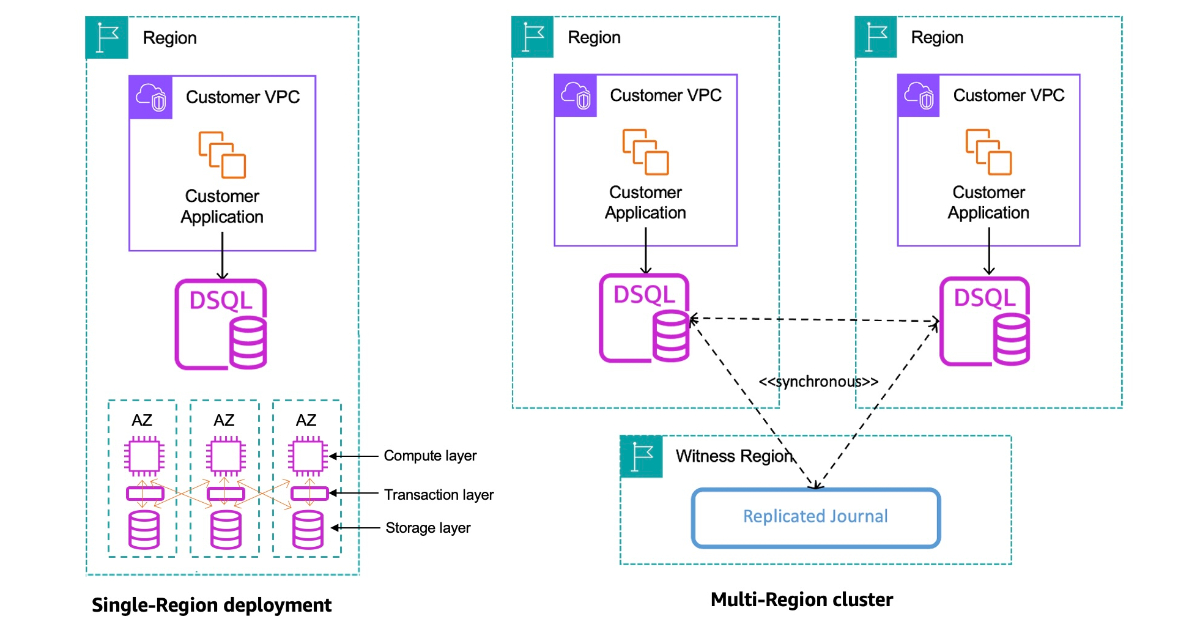
    One of the key highlights of Amazon Aurora DSQL is its support for active-active high availability. This feature ensures that applications remain operational even in the event of a failure in one region, thereby guaranteeing uninterrupted service delivery to users. Moreover, the database’s multi-region strong consistency capabilities enhance data reliability and integrity, providing a robust foundation for mission-critical operations.

    Enhanced Scalability and Flexibility

    With Amazon Aurora DSQL, organizations can scale their databases effortlessly to accommodate fluctuating workloads. The serverless architecture eliminates the need for capacity planning, enabling automatic scaling based on demand. This flexibility not only optimizes resource utilization but also reduces operational overhead, allowing teams to focus on strategic initiatives rather than routine maintenance tasks.

    Optimized Performance and Security

    Furthermore, Amazon Aurora DSQL leverages advanced optimization techniques to deliver exceptional performance, ensuring that applications run smoothly even under heavy loads. By harnessing the power of distributed computing, the database minimizes latency and maximizes throughput, thereby enhancing user experience. Additionally, robust security measures, including encryption at rest and in transit, safeguard sensitive data, instilling trust and compliance with regulatory requirements.

    Seamless Integration and Migration

    For organizations currently using PostgreSQL, the compatibility of Amazon Aurora DSQL offers a seamless transition path. Migrating existing databases to the new platform is simplified, thanks to comprehensive tools and documentation provided by Amazon. This streamlined process minimizes downtime and disruption, enabling a smooth migration experience for enterprises looking to leverage the benefits of Amazon Aurora DSQL.

    Embracing the Future of Database Management

    As the digital landscape continues to evolve, the importance of agile, scalable, and secure databases cannot be overstated. Amazon Aurora DSQL represents a significant step forward in meeting these demands, offering a comprehensive solution that combines the best of PostgreSQL compatibility with the innovation of serverless architecture. By adopting Amazon Aurora DSQL, organizations can future-proof their database infrastructure and stay ahead in an increasingly competitive market.

    Conclusion

    In conclusion, the general availability of Amazon Aurora DSQL heralds a new era in database management, redefining standards for performance, scalability, and reliability. With its revolutionary features and seamless integration capabilities, Amazon Aurora DSQL is poised to revolutionize the way organizations approach database deployment and management. By leveraging this cutting-edge solution, businesses can unlock new possibilities, drive innovation, and stay ahead of the curve in an ever-evolving digital landscape.

  • Amazon Aurora DSQL Goes GA: Distributed, PostgreSQL-Compatible Serverless Database

    Amazon Aurora DSQL Goes GA: Revolutionizing Serverless Databases

    Amazon’s latest breakthrough in database technology, the Amazon Aurora DSQL, has officially launched, marking a significant milestone in the world of cloud computing. This PostgreSQL-compatible, serverless, and distributed database is tailored to meet the demands of modern applications that require high availability and strong consistency across multiple regions.

    Traditionally, managing databases with high availability and scalability required intricate configurations and constant monitoring. However, with Amazon Aurora DSQL, developers can now leverage a fully managed service that handles these complexities seamlessly. This serverless approach allows teams to focus on innovation and development rather than database maintenance.

    One of the key features of Amazon Aurora DSQL is its active-active high availability support. This means that the database can operate simultaneously in multiple regions, ensuring that applications remain online even in the face of regional outages. By distributing workloads across different regions, companies can enhance their disaster recovery strategies and provide uninterrupted services to their users.

    Moreover, Amazon Aurora DSQL offers multi-region strong consistency, guaranteeing that data remains synchronized across various geographic locations. This level of consistency is crucial for applications that require real-time data updates and transactions. With Amazon Aurora DSQL, developers can build global applications with confidence, knowing that data integrity is maintained at all times.

    The PostgreSQL compatibility of Amazon Aurora DSQL is another compelling aspect for developers familiar with this popular open-source database. By supporting PostgreSQL syntax and features, Amazon Aurora DSQL simplifies the migration process for existing applications, enabling a seamless transition to a more scalable and resilient database solution.

    In practical terms, the benefits of Amazon Aurora DSQL are far-reaching. Consider a scenario where an e-commerce platform experiences a surge in traffic during a global sales event. With Amazon Aurora DSQL’s serverless architecture and distributed nature, the database can dynamically scale to accommodate the increased workload, ensuring smooth operations without any manual intervention.

    Furthermore, the cost-saving potential of a serverless database like Amazon Aurora DSQL cannot be overstated. By automatically scaling resources based on actual usage, companies can optimize their spending and avoid over-provisioning hardware that remains underutilized for most of the time. This pay-as-you-go model aligns expenses with business needs, making it an attractive proposition for organizations of all sizes.

    As the demand for highly available, scalable, and performant databases continues to grow, solutions like Amazon Aurora DSQL are poised to redefine the landscape of cloud-native applications. By combining the power of PostgreSQL compatibility, serverless architecture, and distributed capabilities, Amazon Aurora DSQL empowers developers to build resilient and globally distributed applications with ease.

    In conclusion, the general availability of Amazon Aurora DSQL represents a significant advancement in the realm of distributed databases. With its innovative features, seamless scalability, and strong consistency guarantees, Amazon Aurora DSQL is set to revolutionize how businesses approach database management in the cloud. Embracing this technology could be the key to unlocking new possibilities and achieving greater efficiency in the ever-evolving digital landscape.

    —

    Image Source: InfoQ

  • How Technology Is Shaping the Future Of Compliance

    The compliance landscape is evolving fast, and technology is at the heart of that transformation. From AI-powered monitoring tools to blockchain for secure data storage, technological advancements are revolutionizing how businesses ensure adherence to regulations. This shift not only streamlines processes but also enhances accuracy and transparency in compliance efforts.

    One significant way technology is shaping the future of compliance is through the implementation of AI and machine learning algorithms. These tools can analyze vast amounts of data in real-time, flagging any discrepancies or potential violations more efficiently than human capabilities alone. For instance, AI can sift through complex regulatory texts and highlight key requirements, helping organizations stay updated and compliant in a rapidly changing regulatory environment.

    Moreover, blockchain technology is playing a crucial role in ensuring data integrity and security in compliance processes. By creating an immutable ledger of transactions, blockchain provides a transparent record of compliance activities, making it easier to track and verify regulatory adherence. This not only enhances trust among stakeholders but also simplifies audit processes by providing a tamper-proof record of compliance activities.

    Additionally, the rise of RegTech solutions is empowering organizations to automate and optimize their compliance workflows. These software tools leverage technologies such as artificial intelligence, big data analytics, and cloud computing to streamline compliance processes, reducing manual effort and minimizing the risk of human error. By automating routine tasks like data collection, monitoring, and reporting, RegTech solutions free up compliance professionals to focus on more strategic initiatives.

    Furthermore, technology is enabling proactive compliance monitoring through real-time risk assessment and predictive analytics. By harnessing data analytics and machine learning, organizations can identify potential compliance risks before they escalate, allowing for timely intervention and mitigation. This proactive approach not only helps prevent costly compliance violations but also fosters a culture of compliance awareness within the organization.

    In conclusion, the future of compliance is undeniably intertwined with technology. By embracing AI, blockchain, RegTech, and proactive monitoring tools, organizations can navigate the complex regulatory landscape with greater efficiency, accuracy, and agility. As technology continues to advance, staying abreast of these innovations will be key to ensuring robust compliance practices that safeguard organizational reputation and integrity. Embracing technology is no longer an option but a necessity for businesses looking to thrive in an increasingly regulated business environment.

    To learn more about how technology is shaping the future of compliance, you can check out the post “How Technology Is Shaping the Future Of Compliance” on TechRound’s website.

  • How Technology Is Shaping the Future Of Compliance

    In today’s rapidly evolving business landscape, compliance is a critical aspect that organizations cannot afford to overlook. With regulations becoming more stringent and complex, the role of technology in shaping the future of compliance has never been more crucial. From AI-powered monitoring tools to blockchain-based solutions, technological advancements are revolutionizing the way businesses approach compliance.

    One of the key ways technology is transforming compliance is through the use of AI-powered monitoring tools. These tools enable organizations to automate the process of monitoring vast amounts of data in real-time, allowing for more proactive and efficient compliance management. By leveraging machine learning algorithms, AI can identify patterns and anomalies that human oversight might miss, helping organizations stay ahead of potential compliance issues.

    For example, AI can analyze large volumes of transaction data to detect suspicious activities that may indicate money laundering or fraud. By flagging these anomalies in real-time, AI-powered monitoring tools enable organizations to take immediate action to address compliance risks before they escalate.

    Additionally, blockchain technology is also playing a significant role in reshaping compliance processes. The decentralized and tamper-proof nature of blockchain makes it an ideal tool for ensuring data integrity and transparency in compliance-related activities. By recording transactions in a secure and immutable ledger, blockchain technology helps organizations maintain a trustworthy record of compliance activities, reducing the risk of data manipulation or fraud.

    Moreover, technologies such as robotic process automation (RPA) are streamlining compliance workflows by automating repetitive tasks, such as data entry and report generation. By freeing up compliance professionals from manual tasks, RPA allows them to focus on more strategic activities, such as risk assessment and compliance strategy development.

    Another area where technology is making a significant impact on compliance is in the realm of cybersecurity. With the increasing frequency and sophistication of cyber threats, organizations need to ensure that their compliance efforts encompass robust cybersecurity measures. Technologies such as threat intelligence platforms, encryption tools, and security analytics software are essential components of a comprehensive compliance strategy that addresses cybersecurity risks.

    Furthermore, the shift towards remote work brought about by the COVID-19 pandemic has highlighted the importance of technology in enabling compliance in a digital environment. Cloud-based compliance management systems, secure communication tools, and virtual training platforms are essential for ensuring that employees can adhere to compliance requirements regardless of their location.

    In conclusion, the integration of technology into compliance processes is driving significant advancements in how organizations manage regulatory requirements. By leveraging AI, blockchain, RPA, cybersecurity tools, and remote work technologies, businesses can enhance their compliance efforts, mitigate risks, and demonstrate a commitment to operating ethically and responsibly. As the compliance landscape continues to evolve, staying abreast of technological innovations will be key to ensuring long-term compliance success.