Blog

  • Experts Share: How Startups Should Hire If Jobs Are Taken By Automation And AI?

    In today’s rapidly evolving technological landscape, the rise of automation and artificial intelligence (AI) has sparked concerns about the future of jobs. Microsoft’s identification of 40 roles most vulnerable to AI highlights the need for startups to adapt their hiring strategies to this new reality. Knowledge-based professions such as editors are among those facing potential displacement by automation and AI technologies.

    As startups navigate this shifting employment landscape, it is crucial for them to redefine their approach to hiring. Rather than viewing automation as a threat, savvy startups are leveraging these technologies to optimize their operations and drive innovation. By integrating AI tools into their processes, startups can streamline tasks, enhance productivity, and free up employees to focus on higher-value activities that require human expertise.

    Moreover, startups can proactively address the impact of automation on traditional roles by upskilling their workforce. By investing in training programs that equip employees with the skills needed to work alongside AI technologies, startups can ensure their teams remain relevant and adaptable in a changing job market. This approach not only future-proofs the organization but also fosters a culture of continuous learning and development.

    In addition to upskilling existing employees, startups should also rethink their recruitment strategies to attract talent that complements rather than competes with automation and AI. Instead of solely focusing on technical skills, startups can prioritize qualities such as creativity, emotional intelligence, and critical thinking—attributes that are uniquely human and difficult to replicate with technology.

    Furthermore, startups can benefit from adopting a flexible and agile hiring model that embraces remote work and gig economy trends. By tapping into a global talent pool and leveraging freelance professionals for specialized projects, startups can access diverse skill sets and expertise without the constraints of traditional hiring practices. This approach not only promotes innovation and collaboration but also enables startups to scale their operations efficiently in response to market demands.

    Ultimately, the key for startups facing the impact of automation and AI on jobs is to adapt, innovate, and prioritize human-centric values in their hiring practices. By embracing technology as a tool for empowerment rather than replacement, startups can position themselves for long-term success in a dynamic and evolving business landscape.

    In conclusion, the intersection of automation, AI, and job displacement presents both challenges and opportunities for startups. By embracing a forward-thinking approach to hiring, upskilling employees, redefining recruitment criteria, and adopting agile workforce strategies, startups can navigate this transformative era with confidence and resilience. As experts suggest, the future of work is not about man versus machine but about man and machine working in harmony to achieve greater outcomes.
  • Experts Share: How Startups Should Hire If Jobs Are Taken By Automation And AI?

    In today’s rapidly evolving landscape, the integration of automation and artificial intelligence (AI) is reshaping industries across the board. Startups, in particular, face the challenge of navigating this shift, especially when it comes to hiring for roles that are increasingly being automated. Microsoft’s identification of 40 roles most exposed to AI, primarily in knowledge-based domains like editing, serves as a stark reminder of the transformation underway.

    As highlighted in a recent article on TechRound, experts have shared valuable insights on how startups can adapt their hiring strategies in the face of automation and AI encroaching on traditional job roles. Embracing these recommendations can empower startups to not only survive but thrive in the era of digital disruption.

    One key piece of advice from experts is for startups to focus on recruiting talent that excels in uniquely human skills that are less susceptible to automation. While AI can efficiently handle repetitive tasks and data-driven processes, roles requiring creativity, emotional intelligence, and critical thinking are better suited for human employees. By prioritizing these skills in their hiring process, startups can build a team that complements automation technologies rather than competes with them.

    Additionally, experts emphasize the importance of upskilling existing employees to take on more strategic and value-adding responsibilities within the organization. By investing in training programs that equip staff with the skills needed to work alongside AI systems, startups can maximize the potential of both human and machine intelligence. This approach not only future-proofs the workforce but also fosters a culture of continuous learning and innovation within the company.

    Furthermore, experts recommend that startups leverage AI and automation tools in their recruitment process to streamline candidate sourcing, assessment, and onboarding. By utilizing these technologies effectively, startups can expedite the hiring process, identify top talent more efficiently, and improve overall recruitment outcomes. This amalgamation of human expertise with AI-driven insights can lead to smarter hiring decisions and enhanced organizational performance.

    In conclusion, while the rise of automation and AI may pose challenges for startups in terms of job displacement, it also presents opportunities for innovation and growth. By reimagining their approach to hiring, focusing on human-centric skills, upskilling their workforce, and leveraging technology in recruitment, startups can navigate this transformative period with confidence. As the digital landscape continues to evolve, adapting to these changes proactively will be crucial for startups to stay competitive and succeed in the long run.

  • Presentation: Refactoring Stubborn, Legacy Codebases

    Refactoring Stubborn, Legacy Codebases: Unleashing the Power of Modernization

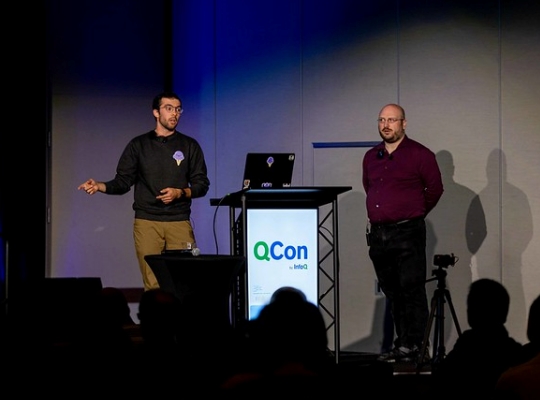
    Legacy code can often feel like a weight dragging down development teams. It’s the old, stubborn codebase that seems resistant to change, slowing down progress and introducing bugs with every tweak. However, it doesn’t have to be this way. In a recent presentation by Jake Zimmerman and Getty Ritter from Stripe, a successful approach to refactoring stubborn Ruby monoliths was unveiled.

    One key aspect highlighted in the presentation is the concept of centralizing migrations with a “point of leverage.” This involves identifying a critical area within the codebase where making changes can have a cascading effect, improving modularity and reducing technical debt. For example, integrating tools like Sorbet for type checking can serve as this pivotal point, enabling developers to make more informed and impactful refactoring decisions.

    Moreover, Zimmerman and Ritter introduced the idea of “good ratchets” as essential tools for refactoring legacy codebases. These ratchets act as local, incremental, and actionable progress enforcers, ensuring that changes are made systematically and steadily. By breaking down the refactoring process into manageable steps, developers can maintain momentum and prevent overwhelming challenges that often accompany large-scale code transformations.

    One of the most valuable takeaways from the presentation is the emphasis on improving developer experience, code quality, and maintainability throughout the refactoring journey. By prioritizing these aspects, teams can not only make the codebase more efficient but also create a more conducive environment for continuous improvement and innovation.

    In practical terms, this means investing in tools and processes that streamline development workflows, enhance code reviews, and automate testing procedures. By fostering a culture of continuous learning and adaptation, organizations can empower their teams to tackle even the most entrenched legacy codebases with confidence and efficiency.

    Refactoring stubborn, legacy codebases is not just about cleaning up outdated code—it’s about revitalizing the foundation of your software to support future growth and innovation. By following the strategies shared by Zimmerman and Ritter, development teams can navigate the complexities of legacy systems with clarity and purpose, unlocking the full potential of their codebase.

    In conclusion, the journey of refactoring legacy code is indeed challenging, but with the right approach and mindset, it can lead to transformative results for both the codebase and the development team. As we continue to push the boundaries of technology, it’s essential to remember that even the most stubborn code can be reshaped and optimized for the ever-evolving digital landscape.

    So, embrace the opportunity to refactor, revamp, and rejuvenate your legacy codebase—it’s a crucial step towards building a more resilient and adaptable software ecosystem.

  • Presentation: Refactoring Stubborn, Legacy Codebases

    Refactoring Stubborn, Legacy Codebases: Unveiling Strategies for Success

    Legacy codebases can be a formidable challenge for any software development team. The accumulation of technical debt, lack of modularity, and outdated practices often make refactoring seem like an insurmountable task. However, with the right strategies and tools, even the most stubborn codebases can be revitalized to meet modern development standards.

    Unpacking Stripe’s Approach

    In a recent presentation, Jake Zimmerman and Getty Ritter shed light on Stripe’s successful methodology for refactoring their entrenched Ruby monoliths. One key aspect of their approach involves centralizing migrations around a “point of leverage.” This concept, exemplified by tools like Sorbet for type checking, serves as a focal point for driving systematic changes throughout the codebase.

    Moreover, Zimmerman and Ritter emphasized the importance of implementing “good ratchets” to facilitate the refactoring process. These ratchets act as local, incremental, and actionable progress enforcers, ensuring that developers make tangible improvements that contribute to the overarching goal of enhancing modularity and reducing technical debt.

    Lessons Learned and Shared

    Throughout their presentation, Zimmerman and Ritter highlighted crucial lessons learned from Stripe’s refactoring endeavors. One significant takeaway is the emphasis on improving the developer experience. By streamlining workflows, providing clear documentation, and offering support for learning new tools and techniques, teams can foster a more conducive environment for refactoring activities.

    Furthermore, the speakers underscored the significance of prioritizing code quality and maintainability during the refactoring process. By setting clear standards, conducting thorough code reviews, and integrating automated testing practices, teams can elevate the overall quality of the codebase while ensuring that future modifications are easier to implement and less error-prone.

    Embracing Change for Future Success

    Refactoring stubborn, legacy codebases is not merely about making surface-level improvements; it is a strategic endeavor aimed at transforming the foundation of software systems for long-term viability. By following Stripe’s example and adopting centralized migration strategies, leveraging “good ratchets,” and prioritizing developer experience and code quality, development teams can navigate the complexities of legacy code with confidence and efficacy.

    In conclusion, the journey of refactoring legacy codebases may be arduous, but with the right mindset, tools, and practices, it is a surmountable challenge that promises immense rewards in terms of improved maintainability, scalability, and overall software quality. Let the lessons from Zimmerman and Ritter’s presentation inspire your team to embark on the path of codebase revitalization and embrace the opportunities that lie ahead.

    Remember, the legacy of today is the foundation of tomorrow’s innovation. Refactor wisely, refactor strategically, and pave the way for a more resilient and adaptable software landscape.

    !Refactoring Legacy Codebases

  • LangGraph Orchestrator Agents: Streamlining AI Workflow Automation

    In the realm of AI-driven applications, the intricacies of complex tasks often necessitate their division into multiple subtasks. However, in many real-world scenarios, determining these exact subtasks in advance proves challenging. Take automated code generation, for example, where the number of files to modify and the specific changes required hinge entirely upon the incoming request. Traditional parallelized workflows encounter difficulties in such unpredictable environments, as they demand predefined tasks from the outset. This rigidity significantly constrains the adaptability of AI systems.

    Enter the Orchestrator-Workers Workflow Agents within LangGraph, offering a dynamic and intelligent solution to tackle this very challenge. Breaking away from static task definitions, a central orchestrator LLM within LangGraph dynamically analyzes the input, identifies the necessary subtasks, and assigns them to specialized worker LLMs. Subsequently, the orchestrator consolidates and integrates the outputs, ensuring a coherent final outcome. These Gen AI services empower real-time decision-making, adaptive task management, and heightened precision, paving the way for the handling of complex workflows with enhanced flexibility and accuracy.

    This innovative approach fundamentally transforms the landscape of AI workflow automation, ushering in a new era of efficiency and adaptability. By leveraging the capabilities of LangGraph Orchestrator Agents, organizations can streamline their processes, optimize resource allocation, and enhance overall productivity in AI-driven tasks. The shift from rigid, predefined workflows to dynamic, adaptable systems not only improves operational efficiency but also opens up new possibilities for innovation and growth in the AI domain.

    Moreover, the seamless integration of LangGraph’s Orchestrator-Workers Workflow Agents into existing AI frameworks offers a smooth transition for organizations looking to enhance their automation capabilities. This integration ensures minimal disruption to ongoing operations while delivering tangible benefits in terms of workflow optimization, task management, and precision in AI-driven tasks. By embracing these cutting-edge technologies, businesses can stay ahead of the curve and remain competitive in today’s rapidly evolving digital landscape.

    In conclusion, LangGraph Orchestrator Agents represent a paradigm shift in AI workflow automation, enabling organizations to navigate the complexities of modern tasks with unprecedented flexibility and intelligence. By harnessing the power of dynamic task analysis, adaptive task management, and real-time decision-making, LangGraph empowers businesses to unlock new levels of efficiency and productivity in their AI-driven endeavors. Embracing these innovative solutions is not just a step forward; it’s a leap towards a future where AI systems work smarter, not just harder, to drive success and innovation across industries.

  • LangGraph Orchestrator Agents: Streamlining AI Workflow Automation

    In the realm of AI, navigating intricate tasks efficiently is paramount. Traditional workflows often stumble when faced with dynamic, unpredictable subtasks. Take automated code generation, for example. The number of files to modify and the specific changes required hinge entirely on each unique request. This variability poses a challenge for rigid, predefined task structures, constraining the adaptability of AI systems.

    Enter LangGraph’s Orchestrator-Workers Workflow Agents, a game-changer in tackling this very challenge. Departing from static task definitions, this innovative approach leverages a central orchestrator LLM that dynamically assesses inputs. By discerning the necessary subtasks and assigning them to specialized worker LLMs, the system ensures a seamless orchestration of diverse processes. The orchestrator then consolidates and refines the outputs, culminating in a coherent final outcome.

    These cutting-edge Gen AI services empower real-time decision-making, adaptive task handling, and heightened precision. The result? Complex workflows managed with unparalleled agility and accuracy, setting a new standard in AI workflow automation. By embracing this intelligent orchestration model, AI systems can navigate dynamic tasks with finesse, ensuring optimal performance in the face of ever-changing demands.

  • I’m worried about the iPhone 17 Air after this battery reveal

    Concerns Arise Over iPhone 17 Air Battery Capacity

    In the ever-evolving world of smartphones, battery life remains a critical factor for users. The recent leak of the iPhone 17 Air’s battery component has sparked concerns among tech enthusiasts, particularly regarding its rumored capacity.

    The images shared on a South Korean blog reveal a remarkably slim battery for the iPhone 17 Air, measuring a mere 2.49mm thick when paired with its metal case. A direct comparison with the iPhone 17 Pro’s battery, which appears to be twice as thick, raises eyebrows about the Air’s power source.

    Reports suggest that the iPhone 17 Air’s battery capacity may be limited to just 2900mAh, significantly lower than the competition. For instance, the Samsung Galaxy S25 Edge boasts a 3900mAh cell, highlighting a potential drawback for Apple’s upcoming release.

    While Apple devices are known for their energy efficiency thanks to the iOS operating system, the disparity in battery size remains a point of concern. The iPhone 16, for instance, features a 3561mAh battery, indicating a trend of smaller battery capacities in Apple’s lineup.

    This revelation leads to understandable apprehension about the iPhone 17 Air’s ability to deliver robust battery performance. With modern smartphones serving as essential tools for work and leisure, users rely heavily on long-lasting battery life to stay connected throughout the day.

    Considering the increasing demands placed on smartphones for multitasking, gaming, and multimedia consumption, a smaller battery capacity could potentially limit the iPhone 17 Air’s usability. Users may find themselves reaching for chargers more frequently, disrupting their daily routines and productivity.

    As we await the official release and detailed specifications of the iPhone 17 Air, the industry will closely monitor Apple’s approach to balancing sleek design with practical battery performance. The success of the iPhone 17 Air hinges not only on its innovative features but also on its ability to meet users’ expectations for reliable battery life.

    In conclusion, the concerns raised by the leaked battery images underscore the significance of battery capacity in shaping the overall user experience of smartphones. Apple’s response to these concerns will undoubtedly influence the reception of the iPhone 17 Air in an increasingly competitive market. Stay tuned for further updates as we track the developments leading up to the iPhone 17 Air’s launch.

  • I’m worried about the iPhone 17 Air after this battery reveal

    Is the iPhone 17 Air’s Battery a Cause for Concern?

    In the ever-evolving world of smartphones, battery life remains a critical factor for users. The recent leak of the iPhone 17 Air’s battery component has sparked some concerns among tech enthusiasts. The thinness of the battery, measuring a mere 2.49mm, has raised eyebrows, especially when compared to the bulkier battery of the iPhone 17 Pro. This discrepancy in size hints at a potential trade-off between sleek design and battery capacity.

    Rumors suggest that the iPhone 17 Air’s battery might only have a capacity of 2900mAh, significantly lower than its competitors like the Samsung Galaxy S25 Edge, which boasts a 3900mAh cell. While Apple devices are known for their energy efficiency, the limited battery capacity raises questions about the device’s stamina, especially for power-hungry tasks.

    Historically, iPhones have sported smaller batteries compared to their Android counterparts, relying on the optimization of iOS for better power management. However, with the increasing demands placed on smartphones for multitasking, gaming, and streaming, battery life has become a crucial aspect of user experience. The iPhone 17 Air’s rumored battery capacity falls short of expectations, leaving users wondering if it can keep up with their daily usage.

    As we harken back to the iPhone 12’s battery performance, which required daily charging for heavy users, concerns about the iPhone 17 Air’s battery life are understandable. Apple’s promise of a more energy-efficient processor for the iPhone 17 Air offers a glimmer of hope for improved battery performance. Nonetheless, the delicate balance between performance and battery life remains a challenge for smartphone manufacturers.

    In conclusion, while the sleek design of the iPhone 17 Air may appeal to many, the compromise on battery capacity raises valid concerns about its usability. As technology advances and consumer expectations grow, striking the right balance between design aesthetics and practical functionality becomes paramount. Apple’s ability to address these concerns and deliver a device that meets users’ evolving needs will determine the success of the iPhone 17 Air in an increasingly competitive market.

  • Embrace AI or leave career, say developers

    In a recent survey conducted among developers, a striking sentiment emerged: Embrace AI or risk being left behind in your career. The message is clear and echoes the growing importance of artificial intelligence in the tech industry. For developers, initial encounters with AI coding tools might have felt underwhelming, with reactions leaning towards “cool, but gimmicky.” However, dismissing AI as a passing trend could prove detrimental in the long run.

    As technology continues to advance at a rapid pace, AI is becoming more integrated into various aspects of software development. From streamlining repetitive tasks to powering advanced analytics, AI has the potential to revolutionize how developers work. Those who resist incorporating AI into their skill set may find themselves at a disadvantage when competing in the job market or working on complex projects.

    One of the key benefits of embracing AI tools is their ability to enhance productivity. For instance, AI-powered code generators can automate mundane coding tasks, allowing developers to focus on more creative and strategic aspects of their work. By leveraging AI for tasks like bug detection, code optimization, and even project management, developers can work more efficiently and deliver higher-quality results in less time.

    Moreover, AI can help developers uncover valuable insights from data, enabling them to make informed decisions and improve their applications. Machine learning algorithms can analyze vast amounts of data to identify patterns, predict trends, and optimize performance. By harnessing the power of AI-driven analytics, developers can gain a competitive edge and create more innovative solutions for their clients and end-users.

    In addition to boosting productivity and enabling data-driven decision-making, AI also presents new opportunities for developers to explore emerging technologies. By learning how to design and implement AI algorithms, developers can expand their skill set and stay relevant in a rapidly evolving tech landscape. Whether it’s developing chatbots, recommendation systems, or predictive models, mastering AI opens doors to exciting career prospects and projects.

    Ultimately, the choice to embrace AI is not just about staying current; it’s about future-proofing your career in the dynamic field of software development. As AI continues to shape the industry and drive innovation, developers who adapt and learn to harness its potential will be well-positioned for success. So, rather than viewing AI as a threat to your career, consider it as a valuable tool that can elevate your skills, projects, and professional trajectory.

    In conclusion, the call to “embrace AI or leave your career” serves as a wake-up call for developers to recognize the transformative power of artificial intelligence. By embracing AI tools, developers can enhance their productivity, unlock valuable insights, and explore new technological frontiers. In a competitive and ever-evolving industry, staying ahead of the curve by integrating AI into your skill set is not just advisable—it’s essential for long-term success. So, are you ready to embrace AI and propel your career to new heights? The choice is yours.

  • Embrace AI or leave career, say developers

    In the fast-evolving landscape of technology, the debate around artificial intelligence (AI) has been gaining momentum. Recent insights from developers shed light on a compelling perspective: embrace AI or risk falling behind in your career. According to a group of 22 developers interviewed about their experiences with AI coding tools, the initial excitement quickly gave way to skepticism, with many labeling the technology as “pretty cool, but gimmicky.”

    This sentiment underscores a pivotal moment in the tech industry where proficiency in AI is no longer a mere advantage but a necessity for career sustainability. Developers who dismiss AI as a passing trend may find themselves at a disadvantage in an increasingly competitive job market. As AI continues to permeate various sectors, from healthcare to finance, the ability to leverage its capabilities becomes a valuable skill set sought after by employers worldwide.

    One key aspect highlighted by developers is the need to move beyond superficial interactions with AI tools. While the initial allure of AI may be captivating, true mastery requires a deeper understanding of its underlying principles and applications. By delving into the intricacies of AI algorithms and frameworks, developers can unlock its full potential and harness its power to drive innovation in their projects.

    Moreover, the integration of AI into software development workflows can streamline processes, enhance productivity, and deliver more sophisticated solutions to end-users. From predictive analytics to natural language processing, AI offers a wealth of opportunities for developers to create cutting-edge applications that push the boundaries of what is possible.

    For developers looking to future-proof their careers, embracing AI is not just a suggestion but a strategic imperative. By upskilling in AI technologies, developers can position themselves as valuable assets in a technology-driven world, where AI is no longer a novelty but a fundamental tool for driving progress. Investing time and effort into mastering AI concepts and applications can open doors to new career opportunities and ensure long-term relevance in a dynamic industry.

    In conclusion, the message from developers is clear: to thrive in the digital age, one must embrace AI or risk being left behind. As AI continues to revolutionize the tech landscape, developers who adapt and innovate with AI will not only survive but thrive in a future where artificial intelligence is at the core of technological advancements. So, are you ready to take the plunge into the world of AI and shape the future of technology? The choice is yours.