Category: Artificial Intelligence in Retail

  • Alexa+ comes to new Fire TV devices with AI-powered conversations

    Amazon has once again revolutionized the entertainment landscape with its latest announcement: the introduction of new Fire TV devices, including the 4K Stick, alongside the innovative Alexa+ AI features. This technological leap not only enhances the viewing experience but also signifies a significant shift in how we interact with our devices.

    The integration of Alexa+ into the new Fire TV devices marks a remarkable advancement in the realm of artificial intelligence. Users can now engage in AI-powered conversations with their TV, enabling a more intuitive and seamless interaction. By simply using voice commands, viewers can effortlessly navigate content, control settings, and even delve into personalized recommendations tailored to their preferences.

    Imagine sitting back on your couch, remote control nowhere in sight, and effortlessly instructing your TV to play your favorite show, adjust the volume, or even provide you with weather updates – all through the power of your voice. This level of convenience not only streamlines the user experience but also sets a new benchmark for smart home integration.

    Furthermore, the introduction of Alexa+ AI features opens up a world of possibilities for developers and content creators. By leveraging this technology, they can craft engaging and interactive experiences that transcend traditional viewing paradigms. From immersive storytelling to interactive gameplay, the potential for innovation is limitless.

    Moreover, the integration of AI-powered conversations into Fire TV devices underscores Amazon’s commitment to pushing the boundaries of technology. By combining the power of AI with the convenience of voice commands, Amazon is not only enhancing the user experience but also paving the way for a more interconnected and intelligent future.

    In conclusion, the arrival of new Fire TV devices equipped with Alexa+ AI features represents a significant milestone in the evolution of home entertainment. As we witness the fusion of cutting-edge technology and intuitive design, one thing is clear: the future of TV viewing has never looked more promising. So, sit back, relax, and get ready to embark on a new era of AI-powered conversations with your TV.
  • DeepMind Release Gemini Robotics-ER 1.5 for Embodied Reasoning

    Unlocking New Frontiers: DeepMind Introduces Gemini Robotics-ER 1.5 for Embodied Reasoning

    Google DeepMind continues to push the boundaries of artificial intelligence with its groundbreaking release of Gemini Robotics-ER 1.5, a cutting-edge embodied reasoning model tailored for robotic applications. This innovative model represents a significant leap forward in the realm of AI-powered robotics, offering a glimpse into the future of intelligent automation.

    At the core of this release lies a fusion of advanced technologies and sophisticated algorithms, designed to enhance the cognitive capabilities of robots in real-world environments. By incorporating embodied reasoning, Gemini Robotics-ER 1.5 enables robots to interact with their surroundings in a more intuitive and adaptive manner, paving the way for enhanced problem-solving and decision-making capabilities.

    One of the key highlights of Gemini Robotics-ER 1.5 is its seamless integration with Google AI Studio and the Gemini API, providing developers with a powerful platform to leverage this cutting-edge technology. This integration not only streamlines the development process but also opens up a world of possibilities for creating intelligent, autonomous robotic systems.

    The release of Gemini Robotics-ER 1.5 underscores DeepMind’s commitment to driving innovation in the field of AI and robotics. By providing developers with access to state-of-the-art tools and technologies, DeepMind empowers them to explore new frontiers and unleash the full potential of intelligent automation.

    Furthermore, the implications of this release extend far beyond the realm of robotics. The advancements in embodied reasoning showcased by Gemini Robotics-ER 1.5 have the potential to revolutionize various industries, from manufacturing and logistics to healthcare and beyond. By enabling robots to reason and interact with the physical world in a more human-like manner, DeepMind is paving the way for a future where intelligent machines seamlessly integrate into our daily lives.

    In conclusion, the introduction of Gemini Robotics-ER 1.5 marks a significant milestone in the evolution of AI-driven robotics. With its emphasis on embodied reasoning and real-world applications, this release sets a new standard for intelligent automation. As developers harness the power of Gemini Robotics-ER 1.5, we can expect to see a new wave of innovations that redefine the possibilities of AI and robotics in the years to come.

  • Evolving Enterprise Defense to Secure the Modern AI Supply Chain

    introduces a host of new challenges, particularly when it comes to securing the modern AI supply chain. As the landscape of enterprise technology evolves, so must our approach to defense. In this article, we will explore the importance of adapting security measures to safeguard the intricate web of AI technologies that power today’s businesses.

    The Rise of Gen-AI and Embedded LLMs

    One of the key drivers behind the transformation of enterprise technology is the rapid adoption of Generation AI, or Gen-AI. This new wave of AI technologies is characterized by its ability to learn, adapt, and evolve in real-time, enabling organizations to harness the power of artificial intelligence in unprecedented ways. At the same time, Software as a Service (SaaS) vendors are integrating Large Language Models (LLMs) directly into their platforms, providing users with powerful AI capabilities out of the box.

    Embracing AI Across Functions

    From marketing and development to finance and HR, AI-powered applications are becoming ubiquitous across all facets of modern organizations. Marketing teams leverage AI to analyze customer behavior and optimize campaigns, while developers use AI to streamline code reviews and automate testing processes. In finance, AI algorithms are employed to detect fraud and manage risk, while HR departments rely on AI to streamline recruitment and enhance employee engagement.

    Securing the Modern AI Supply Chain

    While the widespread adoption of AI brings undeniable benefits, it also exposes organizations to new security risks. Securing the modern AI supply chain requires a proactive and multi-faceted approach that addresses vulnerabilities at every stage of the AI lifecycle. This includes:

    • Data Security: Protecting the vast amounts of data used to train AI models is paramount. Encrypting sensitive data, implementing access controls, and monitoring data flows are essential measures to prevent unauthorized access or data breaches.
    • Model Security: Ensuring the integrity and security of AI models is critical to safeguarding against adversarial attacks and data poisoning. Regular model audits, robust version control, and secure deployment practices help mitigate risks associated with malicious actors.
    • Vendor Risk Management: As organizations increasingly rely on third-party vendors for AI solutions, managing vendor risk becomes a crucial aspect of securing the AI supply chain. Conducting thorough vendor assessments, establishing clear security requirements, and monitoring vendor compliance are key steps in mitigating external threats.

    Adapting Defense Strategies for the Future

    As the AI landscape continues to evolve, so must our defense strategies. Proactive threat intelligence, continuous monitoring, and adaptive security controls are essential components of a robust AI defense framework. By staying vigilant and agile in the face of emerging threats, organizations can effectively secure the modern AI supply chain and harness the full potential of AI technologies.

    In conclusion, the rapid evolution of enterprise technology, driven by the rise of Gen-AI and embedded LLMs, underscores the need for a comprehensive approach to security. By adapting defense strategies to address the unique challenges of the modern AI supply chain, organizations can foster innovation and efficiency while safeguarding their most valuable assets.

  • DeepSeek releases ‘sparse attention’ model that cuts API costs in half

    In a breakthrough move that could revolutionize how AI models process data, researchers at DeepSeek have unveiled their latest innovation – the ‘sparse attention’ model. This experimental model is meticulously crafted to significantly reduce inference costs, especially in long-context operations. By leveraging this cutting-edge technology, businesses can potentially slash their API costs by half, unlocking a new realm of possibilities in the realm of artificial intelligence.

    The traditional approach to processing large volumes of data can often be costly and resource-intensive. However, with the introduction of DeepSeek’s ‘sparse attention’ model, a more efficient and cost-effective solution is now within reach. This model is engineered to optimize the utilization of resources, making it a game-changer for companies looking to streamline their operations without compromising on performance.

    Imagine being able to harness the power of AI with reduced costs and improved efficiency. The ‘sparse attention’ model from DeepSeek makes this a reality by offering a more economical alternative for businesses seeking to leverage AI technologies. By cutting API costs in half, companies can reallocate resources to drive innovation and growth, giving them a competitive edge in today’s dynamic market landscape.

    One of the key advantages of the ‘sparse attention’ model is its ability to excel in long-context operations. This means that businesses dealing with vast amounts of data can now process information more swiftly and accurately, thanks to the enhanced capabilities of this innovative model. By harnessing the power of sparse attention, organizations can enhance their decision-making processes and drive actionable insights from complex data sets.

    The impact of DeepSeek’s latest release goes beyond just cost savings. It paves the way for a new era of AI applications that are not only more efficient but also more accessible to a wider range of businesses. By democratizing AI technology through reduced costs, DeepSeek is empowering organizations of all sizes to harness the power of artificial intelligence and stay ahead of the curve in an increasingly data-driven world.

    In conclusion, the unveiling of DeepSeek’s ‘sparse attention’ model marks a significant milestone in the realm of AI innovation. By delivering a solution that cuts API costs in half and enhances the efficiency of long-context operations, DeepSeek is setting a new standard for cost-effective AI processing. As businesses continue to explore the potential of artificial intelligence in driving growth and innovation, the ‘sparse attention’ model offers a compelling opportunity to maximize resources and unlock the full potential of AI technologies.

  • Anthropic launches Claude Sonnet 4.5, its best AI model for coding

    Anthropic, a trailblazer in the realm of artificial intelligence, has recently made waves with the launch of Claude Sonnet 4.5, its latest and most advanced AI model tailored for coding enthusiasts and professionals alike. This cutting-edge innovation marks a significant leap forward in the field of AI-driven development tools, promising to revolutionize the way software is created and deployed.

    One of the key highlights of Claude Sonnet 4.5, as emphasized by Anthropic, is its remarkable robustness. Unlike previous iterations and existing AI models, this new version is specifically designed to go beyond the realm of mere prototyping. Instead, it boasts the capability to construct full-fledged, production-ready applications—a feat that was previously deemed challenging for AI-powered systems.

    This advancement in AI technology opens up a world of possibilities for developers, enabling them to streamline their coding processes, enhance efficiency, and ultimately bring high-quality software products to market faster than ever before. By leveraging the power of Claude Sonnet 4.5, developers can significantly reduce the time and effort traditionally required for application development, paving the way for a more agile and responsive software development lifecycle.

    Imagine being able to rely on an AI model that not only assists in generating code snippets or suggesting improvements but actually empowers developers to build robust, deployable applications with confidence. With Anthropic’s Claude Sonnet 4.5, this vision becomes a reality. Whether you are a seasoned developer looking to boost productivity or a newcomer eager to learn the ropes of coding, this AI model holds the promise of transforming the way you approach software development.

    Furthermore, Anthropic’s focus on delivering a tool that is capable of producing production-ready applications underscores the company’s commitment to practicality and real-world applicability. In today’s fast-paced digital landscape, where time-to-market and software quality are of paramount importance, having access to AI technology that can facilitate the development of deployable applications is nothing short of a game-changer.

    As we witness the relentless evolution of AI and its integration into various facets of technology, Anthropic’s introduction of Claude Sonnet 4.5 stands out as a testament to the possibilities that lie ahead. By bridging the gap between AI and coding, this innovative AI model not only showcases the strides made in machine learning but also sets a new standard for AI-driven development tools.

    In conclusion, Anthropic’s launch of Claude Sonnet 4.5 represents a significant milestone in the realm of AI-powered coding. With its focus on building production-ready applications, this AI model is poised to redefine the way developers approach software development, offering a glimpse into a future where AI plays an indispensable role in shaping the digital landscape. As we embrace the era of AI-driven innovation, Claude Sonnet 4.5 stands at the forefront, ready to empower developers and pave the way for a new era of coding excellence.

  • Anthropic launches Claude Sonnet 4.5, its best AI model for coding

    Anthropic, a trailblazer in the realm of artificial intelligence, has recently unveiled its latest marvel—Claude Sonnet 4.5. This cutting-edge AI model represents a significant leap forward in coding capabilities, as it is not merely confined to developing prototypes but can also craft production-ready applications. This advancement marks a pivotal moment in the evolution of AI-driven software development.

    With Claude Sonnet 4.5, Anthropic has set a new standard for AI models in the coding domain. Developers now have access to a tool that transcends the limitations of traditional prototyping, offering the potential to streamline the entire application development process. By empowering users to create production-ready applications directly, Anthropic has effectively blurred the line between ideation and execution.

    The implications of this breakthrough are profound. Imagine being able to conceptualize an application and swiftly transform that vision into a fully functional product, all with the assistance of an AI model that understands the intricacies of coding at a deep level. This is the promise that Claude Sonnet 4.5 holds—a promise of efficiency, precision, and accelerated innovation in the software development landscape.

    One of the key strengths of Claude Sonnet 4.5 lies in its robustness. Anthropic has engineered this AI model to not only meet but exceed the demands of real-world application development. By ensuring that Claude Sonnet 4.5 is capable of building production-ready applications, Anthropic has effectively bridged the gap between experimentation and deployment, providing developers with a powerful tool to bring their ideas to life.

    The significance of this advancement cannot be overstated. In an industry where speed-to-market and quality are paramount, having an AI model like Claude Sonnet 4.5 at your disposal can be a game-changer. It empowers developers to iterate rapidly, test ideas efficiently, and ultimately deliver robust, scalable applications with unprecedented ease.

    Moreover, Anthropic’s focus on enabling the creation of production-ready applications underscores a shift towards a more pragmatic approach to AI in software development. Rather than viewing AI as a novelty or a supplementary tool, Anthropic recognizes its potential as a core enabler of innovation and progress in the coding landscape.

    As developers continue to explore the possibilities offered by AI models like Claude Sonnet 4.5, we can expect to see a wave of transformative applications that push the boundaries of what is currently achievable. The era of AI-powered coding is upon us, and Anthropic is leading the charge with its latest offering.

    In conclusion, Anthropic’s launch of Claude Sonnet 4.5 represents a significant milestone in the evolution of AI models for coding. By empowering developers to build production-ready applications, Anthropic has not only raised the bar for AI-driven software development but has also opened up new avenues for innovation and creativity in the industry. As we embrace the era of AI-powered coding, Claude Sonnet 4.5 stands out as a beacon of progress, signaling a future where the boundaries between imagination and realization continue to blur.

  • Complex Chaos thinks AI can help people find common ground

    In a world where differences often seem insurmountable, the quest for common ground becomes increasingly vital. This is where Complex Chaos, a forward-thinking startup, enters the arena with its innovative approach. By harnessing the power of Artificial Intelligence (AI) in the form of a tailored LLM (Large Language Model), Complex Chaos aims to facilitate consensus-building among individuals and groups. The question that naturally arises is whether this AI-driven solution is truly equipped to bridge our deep-seated differences effectively.

    At the heart of Complex Chaos’s initiative lies the belief that AI can serve as a neutral mediator, guiding discussions toward shared understanding and agreement. The LLM’s ability to process vast amounts of data, analyze language patterns, and generate contextually relevant responses positions it as a potentially invaluable tool in navigating complex, emotionally charged dialogues. By providing structured insights and facilitating communication, AI has the potential to unravel misunderstandings and illuminate commonalities that might otherwise remain obscured.

    However, the efficacy of AI in fostering consensus cannot be viewed in isolation. While the technology holds immense promise, its successful implementation hinges on various factors. One crucial aspect is the quality of data fed into the system. For AI to function optimally in mediating disputes or divergent viewpoints, it must be trained on a diverse and representative dataset that encapsulates the full spectrum of perspectives and nuances present in the discourse.

    Moreover, the interpretative capabilities of AI, particularly in grasping subtle cues like tone, body language, and cultural context, are still evolving. While AI excels in processing textual data, its proficiency in discerning underlying emotions or unspoken implications remains an area of ongoing development. This limitation underscores the importance of human oversight and intervention, especially in sensitive or high-stakes scenarios where empathy and intuition play pivotal roles in conflict resolution.

    Despite these challenges, the potential benefits of integrating AI into consensus-building processes are undeniable. By augmenting human decision-making with data-driven insights and analytical prowess, AI can offer a fresh perspective, challenge biases, and catalyze constructive dialogue. In scenarios where entrenched positions impede progress, AI’s impartiality and cognitive capabilities can inject a dose of rationality and objectivity, paving the way for mutual understanding and agreement.

    In conclusion, while Complex Chaos’s utilization of an AI-powered LLM holds significant promise in fostering consensus and bridging differences, it is essential to approach this technology with a nuanced understanding of its capabilities and limitations. AI, as a facilitator of dialogue and mediator of disputes, can undoubtedly enhance our capacity to find common ground. Still, it must be wielded judiciously, supplemented by human judgment, and grounded in a foundation of diverse, high-quality data. As we navigate the complexities of an increasingly polarized world, the synergy between AI and human wisdom may indeed prove to be the key to unlocking shared solutions and forging meaningful connections.

  • The State of AI in the SOC 2025 – Insights from Recent Study 

    The State of AI in the SOC 2025: A Glimpse into the Future of Security Operations

    In the realm of cybersecurity, the year 2025 paints a picture of Security Operations Centers (SOCs) grappling with unprecedented challenges. According to a recent study involving 282 security leaders from various industries, the landscape is fraught with soaring alert volumes and the looming specter of burnout among security professionals. In this turbulent sea of threats, AI emerges as a beacon of hope, offering solutions for triage, detection engineering, and threat hunting.

    One of the most pressing issues highlighted in the study is the sheer deluge of alerts inundating SOCs. As cyber threats grow in complexity and frequency, manual intervention in sifting through alerts has become a Herculean task. Security teams are at a breaking point, with the sheer volume of alerts rendering them unable to investigate every potential threat thoroughly. This situation not only compromises the efficacy of security measures but also exposes organizations to significant risks.

    At the same time, the human toll of this incessant alert fatigue cannot be overlooked. Security professionals are experiencing unprecedented levels of burnout, as the relentless barrage of alerts takes a toll on their well-being and efficiency. The study underscores the urgent need for innovative solutions to alleviate this burden and empower security teams to operate at their full potential.

    In this landscape of escalating challenges, AI emerges as a game-changer for SOC operations. By leveraging artificial intelligence for triage, detection engineering, and threat hunting, security leaders can revolutionize their approach to cybersecurity. AI-powered tools have the capacity to process vast amounts of data at unparalleled speeds, enabling swift and accurate identification of critical threats.

    For instance, AI-driven triage mechanisms can prioritize alerts based on their severity and relevance, allowing security teams to focus their efforts on high-priority incidents. This not only streamlines the investigative process but also ensures that no critical threat goes unnoticed amidst the noise of countless alerts. By automating routine tasks and augmenting human decision-making, AI empowers security professionals to work more efficiently and effectively.

    Moreover, AI plays a crucial role in detection engineering, where its ability to analyze patterns and anomalies in data proves invaluable. By deploying AI algorithms to proactively identify potential threats and vulnerabilities, organizations can stay one step ahead of cyber adversaries. This proactive approach not only enhances the overall security posture but also minimizes the risk of breaches and data exfiltration.

    In the realm of threat hunting, AI serves as a force multiplier for security teams, enabling them to conduct comprehensive investigations and root cause analyses with unparalleled precision. AI-powered threat hunting tools can sift through vast troves of data, uncovering hidden threats and malicious activities that might evade traditional detection mechanisms. This proactive stance is essential in an era where cyber threats are becoming increasingly sophisticated and elusive.

    In conclusion, the state of AI in the SOC in 2025 heralds a new dawn for cybersecurity. As security leaders grapple with escalating alert volumes and burnout among their teams, AI emerges as a beacon of hope, offering innovative solutions to enhance SOC operations. By embracing AI for triage, detection engineering, and threat hunting, organizations can fortify their defenses against evolving cyber threats and safeguard their digital assets. The future of cybersecurity lies in the seamless synergy between human expertise and artificial intelligence, paving the way for a more secure and resilient digital landscape.

  • Report Finds LLMs Not Yet Ready to Replace SREs in Incident Management

    Title: Why Large Language Models (LLMs) Aren’t Ready to Replace Site Reliability Engineers (SREs) in Incident Management Yet

    In the dynamic realm of incident management, the intersection of artificial intelligence and human expertise is a hot topic. A recent study conducted by ClickHouse has shed light on the capabilities of Large Language Models (LLMs) in comparison to Site Reliability Engineers (SREs) when it comes to handling incidents effectively. While the allure of AI-driven solutions is undeniable, the findings suggest that there are crucial areas where LLMs still fall short.

    The study, spearheaded by ClickHouse, rigorously evaluated five prominent LLMs, pitting them against real-world observability data. One of the primary objectives was to assess whether these advanced AI models could autonomously pinpoint the root causes of incidents in complex production environments. The results, however, revealed that while LLMs showcased promising potential, they were not yet equipped to supersede the critical thinking and problem-solving skills of seasoned SRE professionals.

    At the core of incident management lies the ability to swiftly and accurately diagnose issues, minimize downtime, and restore services to normalcy. This demanding task necessitates a deep understanding of intricate systems, quick decision-making under pressure, and a holistic view of the operational landscape. While LLMs excel in processing vast amounts of data and identifying patterns, their current limitations in contextual comprehension and adaptability pose significant challenges in the context of incident response.

    SREs bring a unique blend of technical prowess, domain knowledge, and experience to the table, enabling them to navigate the complexities of incident management with finesse. Their ability to connect the dots across disparate data sources, leverage historical context, and apply nuanced judgment in high-stakes scenarios remains unparalleled. This human touch, coupled with cognitive flexibility, allows SREs to not only resolve incidents efficiently but also prevent future recurrences through proactive measures.

    Moreover, the collaborative nature of incident response, which often involves cross-functional teams and rapid information sharing, underscores the importance of human communication and collaboration skills. While LLMs can analyze data in isolation, their efficacy in fostering seamless teamwork, facilitating transparent communication, and building consensus within diverse groups is still a work in progress. The essence of empathy, intuition, and emotional intelligence that SREs bring to the table fosters cohesive collaboration and effective problem-solving in crisis situations.

    In essence, the ClickHouse study serves as a compelling reminder that while LLMs hold immense promise in revolutionizing various facets of incident management, they are not yet primed to replace the invaluable role of SREs. The future undoubtedly holds great potential for AI-driven tools to augment and enhance the capabilities of human professionals, leading to more efficient incident resolution and proactive system maintenance. However, the intrinsic value of human judgment, adaptability, and communication in navigating the complex landscape of incident management cannot be overstated.

    As organizations continue to explore the synergies between AI technologies and human expertise, striking a balance between automation and human intervention will be key to unlocking the full potential of incident management practices. By leveraging the strengths of both LLMs and SREs in a complementary fashion, businesses can forge resilient incident response strategies that capitalize on the best of AI-driven insights and human ingenuity. The journey towards seamless incident management lies in embracing the collaborative evolution of technology and human-centric approaches, ensuring that organizations stay agile, responsive, and well-equipped to tackle challenges in an ever-evolving digital landscape.

  • MySQL AI Introduced for Enterprise Edition

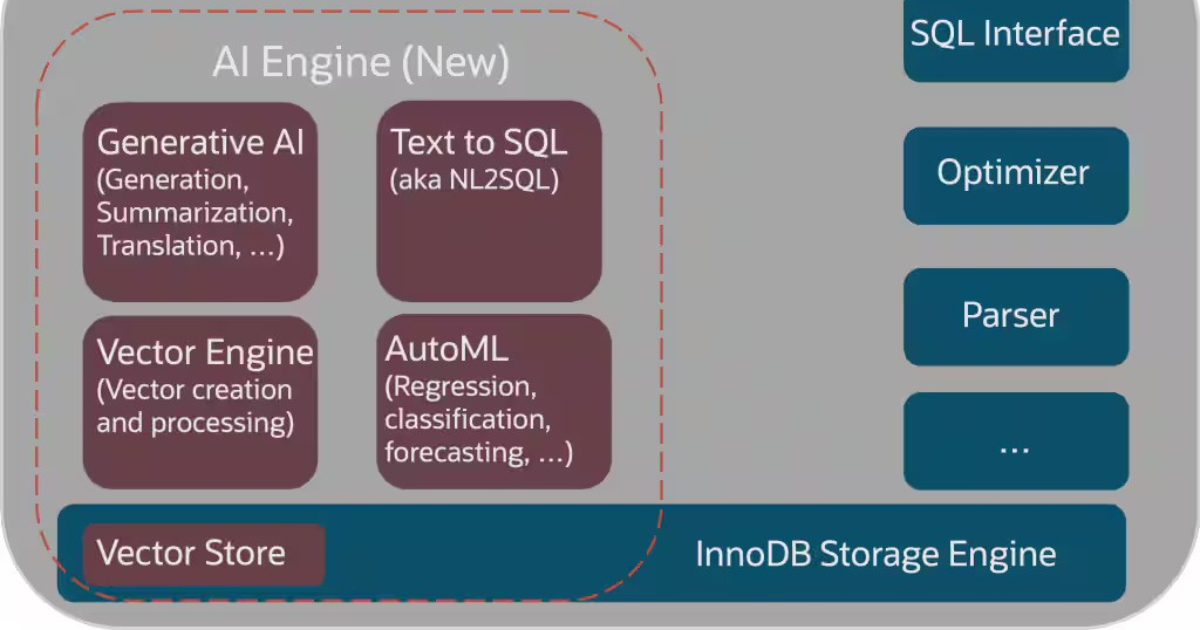
    In a bold move, Oracle has unveiled MySQL AI, a cutting-edge suite of AI-driven features tailored for the MySQL Enterprise edition. This groundbreaking development is strategically designed to cater to the escalating demands of analytics and AI workloads within expansive deployments. However, this unveiling has triggered a wave of apprehension within the MySQL user community, especially regarding the continuity of the beloved Community edition. These concerns stem from the looming specter of potential vendor lock-in, exacerbated by recent internal restructuring within the company.

    The introduction of MySQL AI underscores Oracle’s commitment to harnessing the power of artificial intelligence to propel database management to new heights of efficiency and performance. By integrating AI capabilities into the MySQL Enterprise edition, Oracle is positioning itself as a frontrunner in delivering advanced solutions for handling complex analytics and AI tasks at scale. This move not only showcases Oracle’s forward-thinking approach but also highlights the company’s dedication to empowering enterprises with tools that can drive innovation and productivity.

    One of the key advantages of MySQL AI lies in its ability to optimize performance and streamline operations in large-scale deployments. Through intelligent automation and predictive analytics, MySQL AI equips organizations with the means to enhance decision-making processes, identify trends, and extract valuable insights from vast datasets. By automating routine tasks and offering proactive recommendations, MySQL AI empowers users to focus on strategic initiatives while ensuring optimal database performance.

    Despite the undeniable potential of MySQL AI to revolutionize database management practices, concerns have emerged within the MySQL community regarding the implications for the Community edition. As the spotlight shines on the Enterprise edition with the introduction of AI-powered capabilities, users of the Community edition are left pondering the future roadmap and level of support for the free version. The fear of vendor lock-in looms large, prompting users to evaluate the long-term sustainability and independence of their chosen MySQL edition.

    Moreover, recent internal reorganizations and layoffs within Oracle have added another layer of uncertainty to the equation. The community is closely monitoring how these internal changes may impact the development and support structure of MySQL, particularly in light of the company’s strategic focus on advancing the Enterprise edition with AI-driven features. As users navigate these developments, transparency and communication from Oracle will be crucial in addressing concerns and maintaining trust within the MySQL ecosystem.

    In this dynamic landscape where technology is constantly evolving, the introduction of MySQL AI for the Enterprise edition heralds a new era of innovation and efficiency in database management. As organizations grapple with escalating data volumes and increasing demands for real-time analytics, AI-powered solutions like MySQL AI offer a promising avenue for enhancing performance and driving business outcomes. However, the balancing act between embracing cutting-edge technologies and safeguarding community interests remains a critical challenge that Oracle must navigate adeptly.

    Ultimately, the unveiling of MySQL AI underscores the transformative potential of artificial intelligence in redefining database management practices for the digital age. By leveraging AI-driven capabilities to optimize performance, enable predictive insights, and automate routine tasks, MySQL AI paves the way for enterprises to unlock new possibilities in data management and analytics. As the MySQL ecosystem evolves, stakeholders must remain vigilant, advocating for transparency and collaboration to ensure that innovation serves the collective interests of the community while driving progress in database technology.