Category: AI and Machine Learning

  • Series (2/4): Toward a Shared Language Between Humans and Machines — From Multimodality to World Models: Teaching Machines to Experience

    Toward a Shared Language Between Humans and Machines: Teaching Machines to Experience

    In the quest for machines to truly understand and communicate with humans, researchers are delving into groundbreaking approaches that transcend traditional text-based interactions. The key revelation in this endeavor is the concept that a shared language between humans and machines might be rooted in the very essence of experience itself.

    One promising avenue gaining traction in the research community is the integration of various sensory modalities such as images, sounds, and interactions within a three-dimensional environment. This approach, known as multimodal perception, seeks to equip machines with a more holistic understanding of the world akin to human sensory experiences. By incorporating sensorimotor grounding, which links physical actions with sensory inputs, machines can begin to perceive and interact with their surroundings in a more nuanced manner.

    At the core of this paradigm shift lies the concept of world models. These models serve as internal representations of the external world, allowing machines to simulate and predict outcomes based on their interactions within a given environment. By cultivating robust world models, machines can infer context, anticipate consequences, and ultimately, engage in more sophisticated forms of communication.

    Imagine a machine that not only comprehends the textual content of a message but also interprets the accompanying images, discerns the underlying emotions from sound cues, and navigates a virtual landscape to contextualize the information further. This convergence of sensory inputs and predictive modeling opens up a realm where machines can truly experience the world in a manner akin to human perception.

    By bridging the gap between sensorimotor grounding, multimodal perception, and world models, researchers aim to impart machines with a level of experiential understanding that transcends mere data processing. This shift towards experiential learning holds the potential to revolutionize human-machine interactions, paving the way for more intuitive interfaces, personalized experiences, and enhanced collaboration between humans and machines.

    In essence, teaching machines to experience signifies a paradigm shift in the field of artificial intelligence, moving beyond conventional approaches towards a more immersive and interactive form of machine learning. As researchers continue to explore the boundaries of sensorimotor grounding, multimodal perception, and world modeling, the prospect of a shared language between humans and machines grows ever closer, heralding a new era of symbiotic relationships between man and machine.
  • A Developer’s Practical Guide to Support Vector Machines (SVM) in Python

    Title: Demystifying Support Vector Machines (SVM) in Python: A Developer’s Practical Handbook

    In the realm of machine learning, Support Vector Machines (SVMs) stand out as a versatile and potent tool in a developer’s arsenal. Renowned for their exceptional out-of-the-box performance, SVMs excel in a myriad of tasks, from linear and non-linear classification to regression and outlier detection.

    At the heart of SVM lies the concept of the optimal hyperplane. This hyperplane acts as a crucial separator within the feature space, effectively distinguishing between various classes in classification tasks. By maximizing the margin between classes, SVM ensures robust and accurate predictions, making it a go-to choice for many developers.

    Implementing SVM in Python opens up a world of possibilities for developers seeking to harness its capabilities efficiently. With the plethora of libraries and resources available, diving into SVM in Python is not only practical but also rewarding in its outcomes.

    When delving into SVM implementation in Python, scikit-learn emerges as a prominent library offering comprehensive support for SVM models. Through its user-friendly interface and extensive documentation, developers can swiftly incorporate SVM into their projects with ease.

    One key advantage of utilizing SVM in Python is its seamless integration with other libraries and tools, facilitating a holistic approach to machine learning tasks. Whether it’s data preprocessing, model evaluation, or visualization, Python’s rich ecosystem empowers developers to streamline their workflow and achieve optimal results.

    Moreover, Python’s flexibility allows developers to fine-tune SVM models to suit specific requirements, ensuring customization and adaptability in diverse applications. By tweaking parameters, kernel functions, and regularization techniques, developers can optimize SVM performance to address unique challenges effectively.

    In practice, leveraging SVM in Python involves a series of steps, starting from data preprocessing and feature engineering to model training and evaluation. By following a systematic approach and utilizing Python’s libraries efficiently, developers can navigate the intricacies of SVM with confidence and precision.

    Furthermore, incorporating SVM into real-world projects underscores its significance in enhancing predictive accuracy and generalization capabilities. From sentiment analysis and image recognition to financial forecasting, SVM in Python empowers developers to tackle complex problems with sophistication and reliability.

    In conclusion, mastering Support Vector Machines in Python unlocks a realm of possibilities for developers keen on harnessing the true potential of this powerful algorithm. By combining theoretical knowledge with practical implementation in Python, developers can elevate their machine learning endeavors to new heights, paving the way for innovation and success in the ever-evolving landscape of technology.

  • A Developer’s Practical Guide to Support Vector Machines (SVM) in Python

    A Developer’s Practical Guide to Support Vector Machines (SVM) in Python

    Support Vector Machines (SVMs) stand as stalwarts in the realm of supervised machine learning algorithms. Their reputation precedes them, renowned for delivering top-tier performance effortlessly. SVMs excel in tasks ranging from linear and non-linear classification to regression and outlier detection.

    In classification scenarios, SVM hinges on a fundamental concept: identifying the optimal hyperplane that effectively distinguishes between various classes within the feature space. This hyperplane serves as the bedrock for SVM’s classification prowess, enabling developers to craft robust models with ease.

    When diving into the Python ecosystem for SVM implementation, developers gain access to a myriad of libraries and tools that streamline the process. Libraries like scikit-learn and SVMlight equip developers with the necessary resources to harness SVM’s capabilities effectively.

    Utilizing Python’s syntax and libraries, developers can swiftly construct SVM models that cater to diverse datasets and requirements. The flexibility and scalability of Python make it an ideal choice for implementing SVM, ensuring seamless integration into existing workflows.

    Furthermore, Python’s rich ecosystem of data visualization tools complements SVM development, enabling developers to analyze model performance and fine-tune parameters with precision. This synergy between SVM and Python empowers developers to navigate complex datasets and derive valuable insights effortlessly.

    Incorporating SVM into Python projects opens up a world of possibilities, allowing developers to tackle intricate machine learning challenges with confidence. By leveraging SVM’s robustness and Python’s versatility, developers can elevate their projects to new heights, delivering impactful solutions across various domains.

    In conclusion, mastering SVM in Python empowers developers to unlock the full potential of their machine learning endeavors. The fusion of SVM’s capabilities with Python’s flexibility creates a formidable toolkit for developers seeking to conquer complex data science tasks. Embrace SVM in Python today and embark on a transformative journey towards unparalleled machine learning proficiency.

  • Series: Toward a Shared Language Between Humans and Machines Part 1/4: Why Machines Still Struggle to Understand Us

    Toward a Shared Language Between Humans and Machines: Part 1 – Why Machines Still Struggle to Understand Us

    In the realm of artificial intelligence and language models, there is a fascinating dichotomy. On one hand, these models astound us with their ability to converse fluently, almost as if they truly comprehend our words. Yet, on the other hand, lies a stark reality: machines do not possess our experiences or intentions. The illusion of understanding is just that—an illusion. This raises a crucial question: why do machines still falter in truly grasping human communication?

    One of the fundamental barriers to genuine mutual understanding between humans and machines is the absence of lived experience. Human language is deeply intertwined with our personal encounters, emotions, and cultural nuances. When we speak, we draw upon a rich tapestry of past experiences that shape our words and expressions. In contrast, machines lack this reservoir of lived moments that form the core of human communication.

    Moreover, machines grapple with the absence of a shared world. Our language is replete with references to our physical surroundings, societal norms, and shared knowledge. These contextual cues are often implicit in human conversations but pose a significant challenge for machines to decode. Without a common ground to anchor their understanding, machines struggle to decipher the intricacies embedded in our words.

    Additionally, the very nature of reasoning diverges between humans and machines. While humans employ a blend of logic, intuition, and emotion in their decision-making processes, machines operate on algorithms and data-driven patterns. This radical difference in reasoning mechanisms creates a chasm between how humans and machines approach language comprehension. As a result, machines often falter in capturing the essence and nuances of human communication.

    Consider the complexity of translating between two human languages, a task that even proficient bilinguals find daunting. Language is not merely a tool for communication; it embodies cultural nuances, untranslatable subtleties, and implicit meanings. These intricacies are deeply rooted in lived experiences and frames of thought, elements that elude machines in their quest to understand human language.

    In essence, the challenges that impede machines from truly comprehending human communication stem from the intricate web of human experiences, contextual references, and reasoning processes. As we delve deeper into the quest for a shared language between humans and machines, it becomes evident that bridging this gap requires a nuanced understanding of the complexities that underpin human communication. Stay tuned for the next installment as we unravel further insights on this intriguing journey toward mutual comprehension.

  • Why PyTorch Won

    Why PyTorch Emerged Victorious in the AI Race

    PyTorch, the brainchild of the PyTorch Foundation, has solidified its position as a powerhouse in the realm of artificial intelligence. Luca Antiga, the CTO of Lightning AI and head of the PyTorch Foundation’s Technical Advisory Council, sheds light on the key factors that propelled PyTorch to the top.

    Pythonic Approach and Researcher-Friendly Design

    At the core of PyTorch’s success lies its “Pythonic” design, which resonates well with developers due to its simplicity and ease of use. By prioritizing a researcher-friendly interface, PyTorch swiftly garnered a loyal following within the academic community. This emphasis on user experience set PyTorch apart from its competitors, making it the go-to choice for many in the field of AI and machine learning.

    Debugging Made Effortless

    PyTorch’s seamless debugging capabilities have been a game-changer for developers. The platform’s robust debugging tools empower users to identify and rectify errors swiftly, streamlining the development process. This focus on facilitating efficient debugging has significantly enhanced the overall user experience, attracting professionals from both academia and industry.

    Rapid Iteration for Enhanced Productivity

    One of PyTorch’s standout features is its ability to support fast iteration. This agility enables developers to experiment, iterate, and refine their models at an accelerated pace. By facilitating quick prototyping and model refinement, PyTorch has become synonymous with enhanced productivity in AI development. This agility has played a pivotal role in PyTorch’s widespread adoption across various sectors.

    From Academia to Industry

    What sets PyTorch apart is its successful transition from academia to industry. While many platforms struggle to bridge this gap effectively, PyTorch seamlessly adapted to the demands of industrial applications. Its versatility and robust performance have made it a preferred choice for organizations looking to deploy cutting-edge AI solutions in real-world scenarios.

    In conclusion, PyTorch’s emphasis on user experience, debugging capabilities, rapid iteration, and adaptability has cemented its position as a leader in the AI landscape. As the demand for AI solutions continues to surge, PyTorch stands poised to drive innovation and reshape the future of artificial intelligence. By staying true to its core principles and continually evolving to meet the evolving needs of developers, PyTorch has undoubtedly emerged victorious in the competitive AI race.

  • PyTorch Monarch Simplifies Distributed AI Workflows with a Single-Controller Model

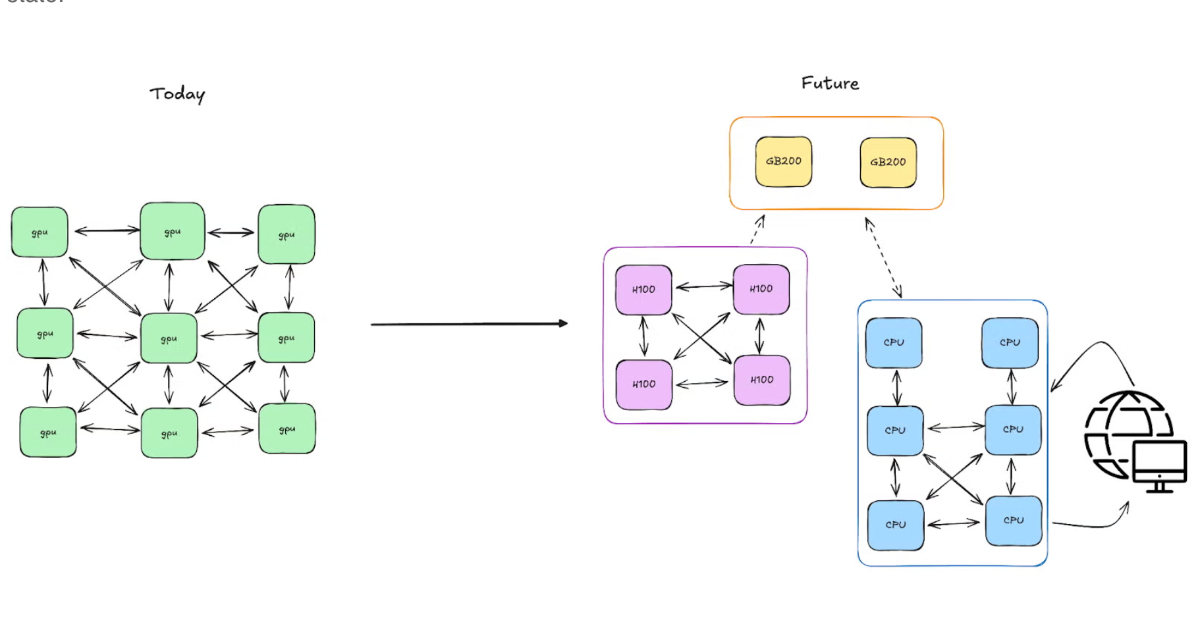
    In the ever-evolving landscape of AI and machine learning, optimizing distributed workflows is a constant challenge for developers. Meta’s PyTorch team has taken a significant step towards simplifying these complexities with the launch of Monarch. This innovative framework offers a streamlined approach to managing distributed AI workflows across multiple GPUs and machines, revolutionizing large-scale training and reinforcement learning tasks.

    One of the key features that sets Monarch apart is its utilization of a single-controller model. This model serves as the centralized hub for managing computations throughout a cluster, eliminating the need for developers to juggle multiple controllers and configurations. By leveraging this unified approach, developers can seamlessly scale their AI projects without getting bogged down in intricate system setups.

    Furthermore, Monarch’s focus on compatibility with standard PyTorch coding practices is a game-changer for developers. It allows them to harness the power of distributed computing without having to overhaul their existing workflows. This means that teams can dive into distributed AI tasks with confidence, knowing that they can rely on familiar coding structures and practices to drive their projects forward.

    Imagine being able to tackle large-scale training tasks or reinforcement learning projects with ease, knowing that Monarch is there to simplify the process. This framework not only boosts productivity but also empowers developers to explore new possibilities in AI development without being hindered by the complexities of distributed workflows.

    By embracing Monarch, developers can unlock a world of potential in distributed AI workflows. Whether you’re working on cutting-edge research projects or developing AI applications for real-world scenarios, having a tool like Monarch in your arsenal can make all the difference. Say goodbye to cumbersome setups and hello to a more streamlined, efficient approach to managing distributed AI tasks.

    In conclusion, Monarch represents a significant leap forward in the realm of distributed AI workflows. Its single-controller model, compatibility with standard PyTorch practices, and ability to simplify large-scale tasks make it a valuable asset for developers looking to push the boundaries of AI and machine learning. Embrace the future of distributed computing with Monarch and experience a new level of efficiency and productivity in your AI projects.

  • Ray Comes to the PyTorch Foundation

    The PyTorch Foundation, known for its dedication to open-source AI initiatives, has made a significant announcement that has sent ripples of excitement throughout the tech community. It has revealed that it will now be the proud home of Ray, a powerful framework that has been gaining momentum in the world of artificial intelligence and machine learning. This strategic move marks a new chapter for both PyTorch and Ray, promising a wealth of opportunities for innovation and collaboration within the industry.

    Ray, originally developed by the team at UC Berkeley’s RISELab, has garnered attention for its ability to streamline the development and deployment of distributed applications. By providing a simple yet efficient platform for scaling Python applications, Ray has become a go-to solution for developers looking to harness the full potential of distributed computing. Its integration into the PyTorch Foundation opens up a realm of possibilities for leveraging Ray’s capabilities in conjunction with PyTorch’s renowned machine learning library.

    This union of PyTorch and Ray is not merely a merger of technologies but a fusion of expertise and vision. The PyTorch Foundation’s commitment to advancing AI research aligns seamlessly with Ray’s mission to simplify complex distributed computing tasks, making them accessible to a wider audience of developers. By joining forces, these two entities have the potential to drive innovation, accelerate research, and shape the future of AI and machine learning.

    For developers, this collaboration represents a goldmine of resources and support. The integration of Ray into the PyTorch ecosystem will undoubtedly enhance the development experience, offering new avenues for experimentation and discovery. Whether you are a seasoned AI expert or a budding enthusiast, the synergy between PyTorch and Ray opens doors to a wealth of tools and frameworks that can supercharge your projects and push the boundaries of what is possible in the realm of artificial intelligence.

    Moreover, this partnership underscores the growing importance of collaboration in the tech industry. As technologies continue to evolve at a rapid pace, the need for synergy between different platforms and frameworks becomes increasingly crucial. By coming together under the PyTorch Foundation’s umbrella, Ray and PyTorch exemplify the power of teamwork in driving innovation and fostering a community of like-minded individuals dedicated to pushing the boundaries of technology.

    In conclusion, the integration of Ray into the PyTorch Foundation marks a significant milestone in the realm of AI and machine learning. It represents a convergence of cutting-edge technologies, visionary thinking, and a shared commitment to advancing the field of artificial intelligence. As we look to the future, the possibilities that lie ahead are boundless, fueled by the collective expertise and passion of the PyTorch and Ray communities. Get ready to embark on a journey of innovation and discovery, powered by the dynamic synergy of PyTorch and Ray.

  • Ray Comes to the PyTorch Foundation

    Ray Comes to the PyTorch Foundation

    The PyTorch Foundation, known for its contributions to the open-source AI ecosystem, has made a significant announcement that has reverberated through the tech community. They revealed that they will now be hosting Ray, a state-of-the-art distributed computing framework that has been gaining traction for its ability to scale applications seamlessly.

    This move marks a pivotal moment for both the PyTorch Foundation and the Ray project. By joining forces, they are poised to drive innovation and collaboration in the AI and machine learning space. Ray’s integration into the PyTorch Foundation’s ecosystem is expected to streamline the development process for AI applications, making it more accessible to developers worldwide.

    Ray’s advanced capabilities, such as distributed training and hyperparameter tuning, align perfectly with the PyTorch Foundation’s mission to empower developers with cutting-edge tools. This integration opens up a world of possibilities, enabling developers to build and deploy complex AI models with ease.

    One of the key benefits of Ray is its ability to efficiently scale applications from a single machine to large clusters. This scalability is crucial in today’s data-driven world, where the demand for processing power continues to rise. With Ray now under the PyTorch Foundation’s umbrella, developers can leverage its distributed computing capabilities to tackle complex AI tasks more effectively.

    Moreover, Ray’s focus on high performance and ease of use makes it a valuable addition to the PyTorch Foundation’s toolkit. Developers can now take advantage of Ray’s features seamlessly within the PyTorch ecosystem, enhancing their productivity and enabling them to push the boundaries of AI innovation.

    The decision to bring Ray into the PyTorch Foundation underscores a commitment to fostering collaboration and driving advancements in AI technology. By consolidating resources and expertise, both organizations can accelerate the development of AI applications and frameworks, benefiting the entire community.

    As the integration progresses, developers can look forward to a more cohesive ecosystem that combines the strengths of PyTorch and Ray. This union is poised to catalyze new possibilities in AI research and development, empowering developers to create groundbreaking solutions that push the boundaries of what is possible.

    In conclusion, the PyTorch Foundation’s decision to host Ray signals a new chapter in the evolution of AI frameworks. By merging their capabilities, these two powerhouses are set to redefine the landscape of AI development, ushering in a new era of innovation and collaboration. As developers explore the synergies between PyTorch and Ray, we can expect to see groundbreaking advancements that shape the future of AI.

  • AI/ML-Based Storage Optimization: Training a Model to Predict Costs and Recommend Configurations

    The Power of AI/ML in Storage Optimization

    In the landscape of cloud storage, where data volumes are on an exponential rise, the need for efficient cost management has become paramount. Traditional methods relying on predefined rules and manual intervention are proving insufficient in the face of today’s dynamic data ecosystems. Enter artificial intelligence (AI) and machine learning (ML) technologies, offering a paradigm shift in how storage optimization is approached.

    By harnessing the capabilities of AI and ML, organizations can delve into the intricacies of data access patterns, anticipate future costs, and recommend tailored storage configurations that strike a perfect balance between performance and cost-effectiveness. The marriage of data analytics and predictive modeling opens up a realm of possibilities in optimizing storage infrastructure, ensuring resources are utilized optimally without compromising on performance.

    Imagine a scenario where a machine learning model, trained on historical data patterns, can accurately forecast storage costs based on usage trends. This predictive prowess not only empowers organizations to anticipate expenditure but also enables proactive decision-making in selecting the most suitable storage tiers and configurations. As a result, businesses can align their storage resources with actual needs, avoiding overprovisioning and unnecessary expenses.

    One of the most compelling aspects of AI/ML-based storage optimization is its adaptability to changing environments. Unlike static rules that quickly become obsolete in the face of evolving data dynamics, machine learning models continuously learn and adapt to new patterns, ensuring that storage configurations remain optimized in real-time. This agility is a game-changer in an era where data growth is relentless, and traditional approaches struggle to keep pace with the evolving storage landscape.

    Let’s take a practical dive into the realm of AI/ML-driven storage optimization by exploring the process of building a simple machine learning model in Python. By focusing on predicting S3 storage costs and recommending optimal storage classes, we can unravel the tangible benefits and insights that AI/ML bring to the table. This hands-on approach not only demystifies the complex world of machine learning but also sheds light on the transformative potential it holds for storage management.

    In conclusion, the fusion of AI and ML technologies with storage optimization ushers in a new era of efficiency and cost-effectiveness. By harnessing the predictive capabilities of machine learning models, organizations can navigate the complexities of modern data storage with confidence, making informed decisions that drive both performance and savings. Embracing AI/ML in storage optimization is not just a recommendation—it’s a strategic imperative in today’s data-driven world.

  • AI/ML-Based Storage Optimization: Training a Model to Predict Costs and Recommend Configurations

    The Future of Storage Optimization: Leveraging AI/ML for Cost-Effective Solutions

    In the rapidly evolving landscape of cloud storage, managing costs efficiently has become a paramount concern for organizations worldwide. With data volumes growing exponentially and storage architectures becoming increasingly complex, traditional static approaches to storage management are proving inadequate. In this scenario, the integration of Artificial Intelligence (AI) and Machine Learning (ML) technologies offers a transformative solution to the challenge of optimizing storage resources while minimizing costs.

    The Power of AI/ML in Storage Optimization

    AI and ML algorithms are revolutionizing the way storage systems are managed by enabling dynamic, data-driven analyses that can adapt to changing workload patterns and storage requirements. By leveraging these advanced technologies, organizations can gain valuable insights into how data is accessed, anticipate future storage needs, and make informed decisions about the most cost-effective storage tiers and configurations.

    One of the key advantages of AI/ML-based storage optimization is the ability to move beyond rigid, rule-based approaches towards intelligent, predictive models that continuously learn and improve over time. By training ML models on historical storage usage data, organizations can develop accurate cost predictions and receive recommendations for optimizing storage allocations based on specific workload characteristics.

    Building a Machine Learning Model for Storage Cost Prediction

    To illustrate the practical application of AI/ML in storage optimization, let’s consider a simple example of training a machine learning model in Python to predict Amazon S3 storage costs and recommend optimal storage classes. By collecting and preprocessing historical data on storage usage, cost metrics, and workload patterns, developers can build a predictive model that analyzes these factors to forecast future storage costs with a high degree of accuracy.

    Through the implementation of regression algorithms and data visualization techniques, it is possible to identify cost-saving opportunities such as transitioning data to lower-cost storage classes during periods of low activity or archiving infrequently accessed data to reduce overall storage expenses. By fine-tuning the ML model based on feedback from actual cost savings achieved, organizations can continuously refine their storage optimization strategies and drive greater efficiencies in their cloud storage environments.

    Real-World Insights and Best Practices

    As organizations increasingly adopt AI/ML-based storage optimization solutions, several key lessons have emerged from real-world deployments. Firstly, it is essential to establish clear objectives and success criteria for implementing AI/ML in storage management to ensure alignment with business goals and performance benchmarks. Secondly, organizations should invest in data quality and governance practices to ensure the accuracy and reliability of input data used for training ML models.

    Furthermore, ongoing monitoring and evaluation of AI/ML algorithms are critical to detecting anomalies and recalibrating models as storage workloads evolve. By leveraging automation and orchestration tools to integrate AI/ML-based recommendations into storage provisioning workflows, organizations can streamline decision-making processes and achieve greater agility in responding to changing storage demands.

    In conclusion, the integration of AI and ML technologies into storage optimization represents a paradigm shift in how organizations approach cost management and resource allocation in cloud environments. By harnessing the power of predictive analytics and intelligent decision-making, businesses can unlock new efficiencies, reduce operational overhead, and achieve sustainable cost savings in their storage infrastructure.

    As we navigate the complexities of modern storage environments, embracing AI/ML-based solutions is not just a competitive advantage but a strategic imperative for organizations looking to stay ahead in the digital age. By investing in the development of AI/ML capabilities for storage optimization, businesses can transform their storage operations and pave the way for a more cost-effective and agile future.